Stinging Nettle: The Nourishing Green Powerhouse
Stinging nettle is packed with nutrients and medicinal benefits you can learn about once you get past the sting! Discover how to identify it, the many benefits of working with this plant, and how to use it.
If you’ve ever brushed against a plant and felt a sudden sting, you may have already met stinging nettle. Though it has a prickly reputation, this wild green is one of herbalism’s most beloved plants. For centuries, nettle has been valued as both food and medicine, offering deep nourishment, seasonal support, and a surprising amount of versatility.
Stinging nettle invites us to look beyond first impressions. Beneath its sting lies a plant rich in minerals, vitamins, and traditional wisdom. Whether you are foraging in spring, tending a backyard patch, or stocking your herbal pantry, learning to identify and work with nettle is a rewarding skill. In this guide, we’ll explore how to recognize nettle, its traditional uses, important cautions, and simple ways to prepare it at home.
Identifying Stinging Nettle in the Wild
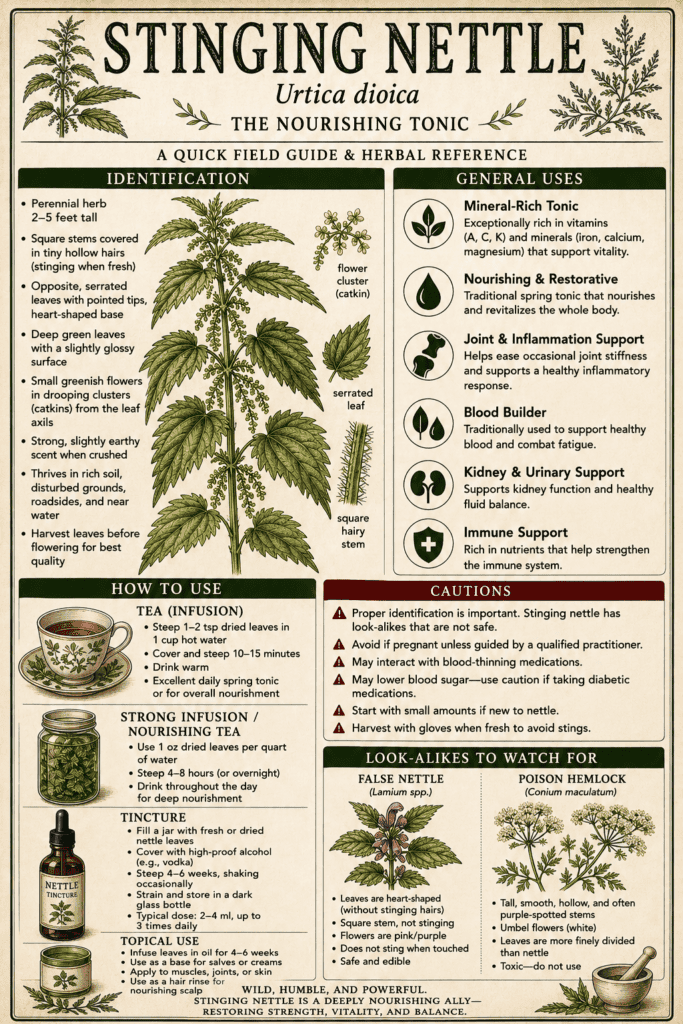
Stinging nettle (Urtica dioica) is a perennial plant (meaning it returns each year) that thrives in moist, nutrient-rich soil. It often grows along stream banks, woodland edges, fence lines, gardens, and disturbed ground. In ideal conditions, it can reach 3 to 6 feet tall or even more.
Identifying features include:
- Opposite leaves with sharply serrated edges and a pointed tip.
- Leaves are oval to lance-shaped, deep green, and covered with tiny stinging hairs that can cause a burning, itchy sensation when touched.
- Stems are also covered in these hairs and may appear slightly square or ridged
One of the easiest ways to identify nettle is by its sting, but proper identification still matters. The most common lookalikes are dead nettles (Lamium species), which do not sting and often have more rounded, scalloped leaves with purple, pink, or white flowers. Dead nettles are not dangerous, but they are not the same plant. Always confirm identification before harvesting, and wear gloves when handling fresh nettle.
The best time to harvest nettle is in spring, when the young tops are tender and before the plant flowers. These early leaves are the most flavorful and are often preferred for tea, food, and medicine.

Traditional and Modern Uses of Stinging Nettle
Stinging nettle has long been known as a nourishing herb. It is rich in minerals such as iron, calcium, magnesium, and potassium, making it a favorite spring tonic and daily herbal tea for those looking to support overall vitality. Many herbalists consider nettle a deeply restorative plant that helps replenish the body after long winters or periods of depletion.
Nettle is also traditionally used to support healthy urinary function and fluid balance. Because it has mild diuretic properties, it may help the body gently move excess water while supporting the kidneys and bladder. It has also been used to ease seasonal discomfort, especially when taken regularly during allergy season.
In addition, nettle has a long history of use for joint and muscle support. Some people turn to nettle as part of a broader wellness routine for stiffness or general inflammation. Externally, nettle can be used in hair rinses, infused oils, or compresses to support the scalp and skin.
Cautions and Who Should Avoid Stinging Nettle
Although nettle is generally considered safe when properly prepared, there are important cautions to keep in mind. Fresh nettle should never be eaten raw unless it has been thoroughly processed, as the stinging hairs can irritate the skin and mouth. Cooking, drying, blending, or steeping in hot water neutralizes the sting.
People with kidney disease, fluid restrictions, or those taking diuretic medications should speak with a healthcare professional before using nettle regularly. Nettle may also interact with blood pressure medications, blood sugar medications, and lithium. If you are pregnant, nursing, or taking prescription medications, it is wise to consult a qualified practitioner before using nettle medicinally.
As with any wild plant, harvest only from clean areas away from roadsides, sprayed fields, or polluted water sources. Wear gloves, long sleeves, and possibly scissors or garden shears when gathering fresh nettle to avoid the sting.
Ways to Work with Stinging Nettle
One of the best things about nettle is how easy it is to prepare once harvested. It can be used as food, tea, tincture, or topical preparation, making it a wonderfully flexible herb for home use.
Nettle Tea:
To make nettle tea, steep 1–2 teaspoons of dried nettle leaf in a cup of hot water for 10–15 minutes. For a stronger mineral-rich infusion, use a larger handful of dried leaf in a quart jar and steep for several hours or overnight. The flavor is earthy, green, and mildly grassy. This is one of the most popular ways to enjoy nettle regularly.
Topical Use:
Nettle can be infused into oil or vinegar for use in hair and skin care. To make a simple hair rinse, steep dried nettle in hot water, strain, and allow it to cool before pouring over the scalp after shampooing. Nettle-infused oil can also be made by covering dried leaf with a carrier oil and letting it sit for several weeks before straining. This can be used in salves or scalp treatments.
Tincture Preparation:
A nettle tincture is a concentrated liquid extract that preserves the herb for long-term use. Fill a jar with fresh or dried nettle leaf and cover it with high-proof alcohol such as vodka. Seal the jar and let it sit in a cool, dark place for 4–6 weeks, shaking occasionally. Strain and store in a clean bottle. Tinctures are usually taken in small amounts, diluted in water.

Food Use:
Fresh nettle can be cooked like spinach once wilted or blanched. Add it to soups, sautés, pesto, or egg dishes. Cooking removes the sting and makes nettle a delicious, nourishing green.
Each of these preparations offers a different way to enjoy nettle’s rich, grounding qualities. Whether sipped as tea, taken as a tincture, or eaten as food, nettle is a plant that feeds both body and spirit.
Final Thoughts on Stinging Nettle
Stinging nettle is a perfect example of a plant that asks for respect and gives generously in return. Though its sting may make it seem unfriendly at first, nettle is one of the most nourishing and versatile herbs in the wild apothecary.
By learning to identify it carefully, harvesting it with care, and preparing it thoughtfully, you can welcome nettle into your herbal practice with confidence. From tea to tincture to soup pot, this humble green offers steady support and a reminder that some of the best medicine comes with a little edge.