Plantain Leaf: The Quiet Healer Beneath Your Feet
Plantain is a safe, abundant treasure that you can find under your feet almost anytime you look down! Discover how to identify it, use it and the many simple benefits of plantain leaf.
Plantain leaf was the plant that introduced my family and I to herbalism and natural medicine. It's resilient, easy to identify, safe, and even edible.
Plantain leaf has long been valued as a soothing, drawing, and cooling herb. Herbalists often reach for it when the skin needs comfort, the lungs need support, or the body needs a gentle, grounding remedy.
Whether you are just beginning to explore wild herbs or you already keep a jar of dried leaves on your shelf, plantain is a wonderful plant to know. In this guide, we’ll look at how to identify it, what it is traditionally used for, what cautions to keep in mind, and simple ways to turn it into everyday herbal medicine.
Identifying Plantain Leaf in the Wild
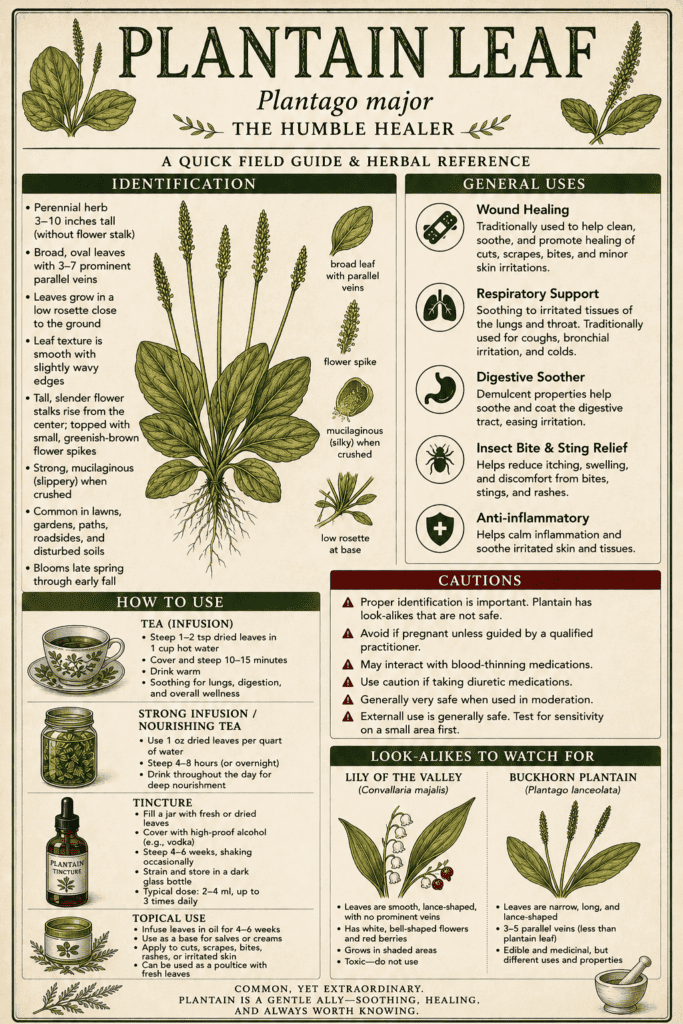
Plantain is a perennial herb that grows in lawns, fields, sidewalks, gardens, and other disturbed places. It is often one of the first plants to appear in compacted soil, which is part of what makes it such a familiar “weed.” There are two common medicinal species: broadleaf plantain (Plantago major) and narrowleaf plantain (Plantago lanceolata). Both are used similarly in herbalism.
Broadleaf plantain grows in a low basal rosette, meaning the leaves emerge from the ground in a circle rather than along a tall stem. The leaves are oval to egg-shaped, with smooth or slightly wavy edges and several strong, parallel veins running from the base to the tip. These veins are one of the easiest ways to identify plantain.

In late spring and summer, plantain sends up slender, leafless stalks topped with small greenish flowers or seed heads. These stalks rise above the rosette and can look a little like tiny bottlebrushes or spikes. The plant is usually only a few inches tall in its leafy stage, though the flower stalks can grow much taller.
Traditional and Modern Uses of Plantain Leaf
Plantain leaf has earned a reputation as one of the best “first aid” herbs in the wild. It is especially known for its ability to soothe irritated skin and support the body’s natural healing response. Fresh leaves are often used on insect bites, stings, minor cuts, scrapes, and splinters. Herbalists sometimes call it a “drawing” herb because it can help bring out irritation and calm the area.
Internally, plantain leaf is often used to support the respiratory system. Its soothing, moistening qualities make it a favorite for dry coughs, scratchy throats, and irritated mucous membranes. A warm tea or infusion can feel especially comforting when the body needs gentle support.
Plantain is also valued for digestive support. Its mild, cooling nature can help soothe the digestive tract, especially when there is irritation or heat. Some herbalists use it as part of a broader routine for calming the gut and supporting overall balance.
Because it grows so abundantly and is easy to prepare, plantain leaf is one of those herbs that feels both practical and magical. It is the kind of plant that reminds us medicine does not always need to be exotic or complicated—sometimes it is growing right under our feet.
Cautions and Who Should Avoid Plantain Leaf
Plantain leaf is generally considered a gentle herb, but a few cautions are still worth noting. First, proper identification is important, especially if you are harvesting wild plants for the first time. While plantain does not have many dangerous look-alikes, it is always best to confirm the leaf shape, vein pattern, and growth habit before using it.
The biggest practical caution with plantain is where it grows. Because it thrives in disturbed soil, lawns, roadsides, and paths, it may be exposed to pesticides, pet waste, pollution, or other contaminants. Always harvest from clean, untreated areas away from heavy traffic and chemical exposure.
If you are pregnant, nursing, taking prescription medications, or managing a chronic health condition, it is wise to check with a qualified healthcare provider before using plantain medicinally, especially in concentrated forms like tinctures or strong infusions.
Ways to Work with Plantain Leaf
One of the best things about plantain is how easy it is to use. It can be prepared fresh or dried, and it works well in both simple home remedies and more traditional herbal preparations.
Topical Use:
Fresh plantain leaves can be crushed or chewed slightly and applied directly to insect bites, stings, or minor skin irritations. This is one of the simplest field remedies you can make. You can also make a poultice by mashing fresh leaves and placing them on the affected area, then covering with a clean cloth or bandage. For longer-term use, plantain can be infused into oil and turned into a salve for dry, irritated, or sensitive skin.
Plantain Tea:
To make a simple tea, steep 1–2 teaspoons of dried or 1-2 tablespoons of fresh plantain leaf in a cup of hot water for 10–15 minutes. The flavor is mild, earthy, and slightly green. This tea is often used to soothe the throat, support the lungs, or gently calm the digestive system. For a stronger infusion, use a larger amount of dried leaf and let it steep longer.
Tincture Preparation:
A plantain tincture is a concentrated liquid extract that can be stored for long periods. To make one, fill a jar with fresh or dried plantain leaf and cover it with high-proof alcohol such as vodka. Seal the jar and let it sit in a cool, dark place for 4–6 weeks, shaking it occasionally. After straining, the tincture can be taken in small amounts, usually diluted in water.
Infused Oil and Salve:
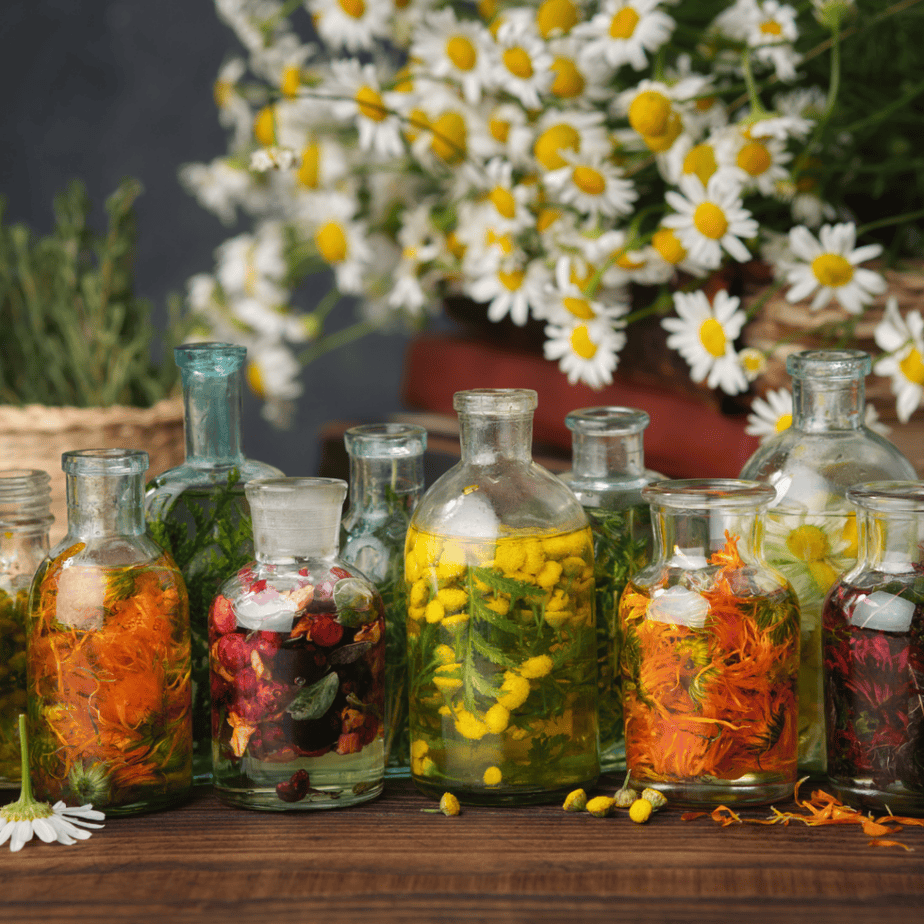
Dried plantain leaf can be infused into oil by covering it with olive oil or another carrier oil and letting it sit for several weeks. Once strained, the oil can be used on its own or combined with beeswax to make a soothing salve. This is a lovely way to keep plantain on hand for skin care throughout the year.
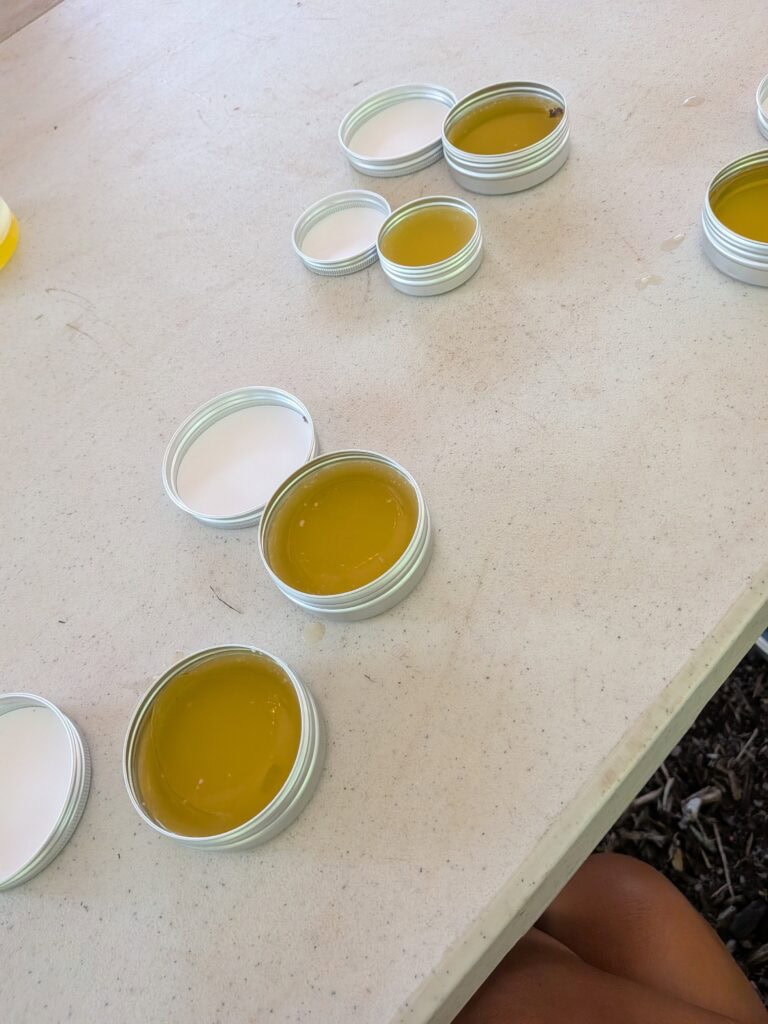
Each of these preparations highlights a different side of plantain’s gentle strength, making it a versatile herb for both home and field use.
Final Thoughts on Plantain Leaf
Plantain leaf is one of those quiet plants that rewards attention. It may not be flashy, but it is dependable, abundant, and deeply useful. From soothing skin to supporting the lungs and digestion, plantain has earned its place in the herbalist’s toolkit through both tradition and everyday experience.
By learning to identify it carefully, harvesting it from clean places, and preparing it simply, you can begin to work with this humble herb in ways that are practical, nourishing, and easy to remember. Sometimes the best medicine is the one growing right beneath your feet.