Echinacea: The Bright Coneflower of Immune Support
Echinacea is not just a beautiful flower for your yard, its a valuable herb that supports the body's immune system in some pretty impactful ways. Discover how to identify it, what you can do with it, and more!
As my son and I drive down our suburban roads, we have to constrain ourselves not to snip the pedals off of our neighbors echinacea flowers. Of course I am kidding - (not because I want to lose friends but because the yards may have chemicals in them). But it amazes me how much people don't understand the amazing benefits of this beautiful purple plant.
Echinacea invites us to notice how medicine can be both striking and practical. It is a plant that feels at home in wild meadows, cultivated gardens, and herbal cabinets alike.
Whether you are just beginning to explore herbs or already have a growing apothecary, learning to identify and work with echinacea is a valuable step. In this guide, we’ll explore how to recognize echinacea, understand its traditional uses, learn important cautions, and discover simple ways to prepare it at home.
Identifying Echinacea in the Wild
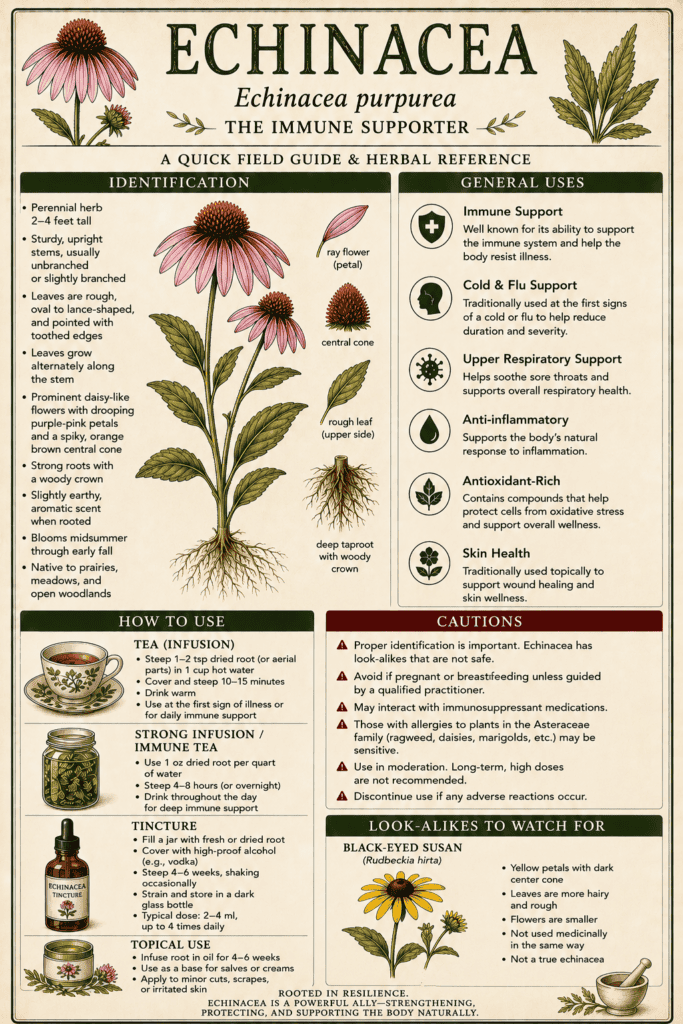
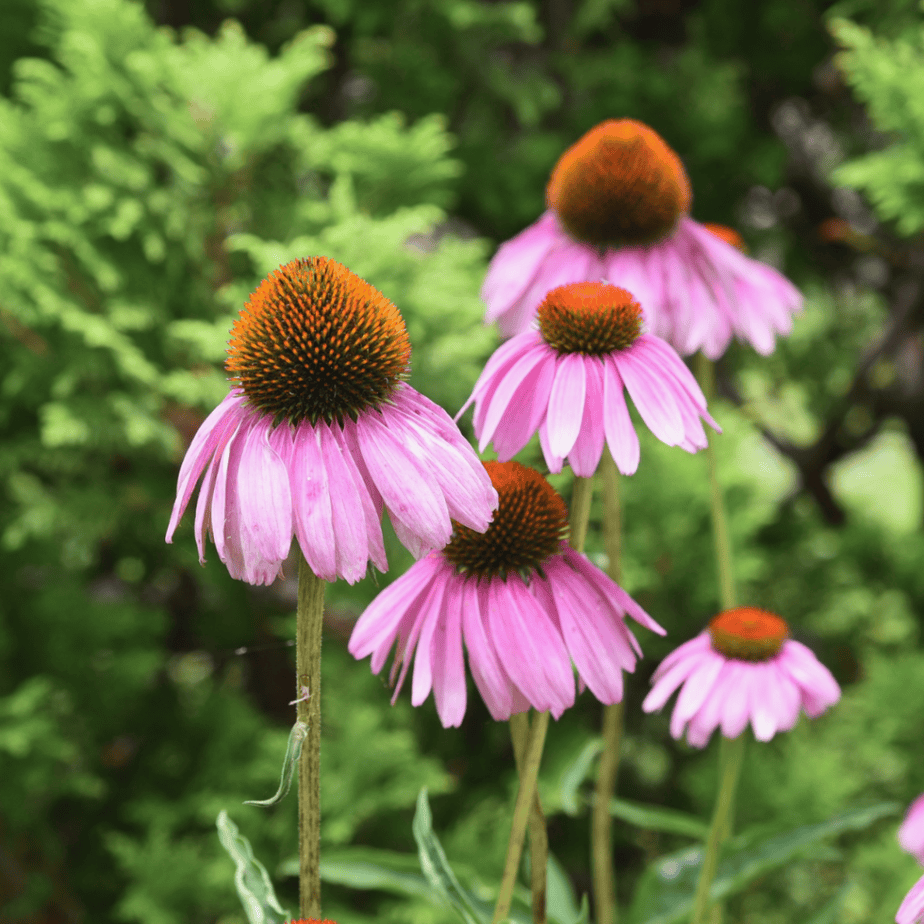
Echinacea is a perennial herb (meaning it returns each year) in the daisy family, Asteraceae, and is most commonly associated with prairie landscapes and sunny garden spaces. The species most often used in herbal medicine include Echinacea purpurea, Echinacea angustifolia, and Echinacea pallida. Of these, Echinacea purpurea is the most widely cultivated and easiest to find.
Echinacea’s most distinctive features include:
- Petals are usually purple, pink, or sometimes pale white, and they droop downward from a raised, cone-shaped center. C
- Central cone is rough and spiky in appearance, often orange, brown, or greenish in color.
- Typically grows between one and four feet tall, with sturdy stems and lance-shaped leaves that may be slightly rough to the touch.
- Leaves are arranged alternately along the stem and can vary in shape depending on the species.
The roots of echinacea are also important in herbal use, especially for certain species, and they have a distinctive earthy smell when freshly dug.
Because echinacea belongs to the daisy family, it can be confused with other similar-looking flowers such as black-eyed Susan (Rudbeckia hirta) or false coneflower. These plants are not usually dangerous, but they are not the same as echinacea and do not have the same herbal properties.
Traditional and Modern Uses of Echinacea
Echinacea has a long history of use among Indigenous peoples of North America, who used different parts of the plant for a variety of purposes. Over time, it became one of the most popular herbs in Western herbalism, especially for supporting the immune system.
Today, echinacea is best known as a herb people reach for at the first sign of seasonal discomfort. It is often used to support the body during colds, sore throats, and other minor immune challenges. Herbalists traditionally value echinacea for its ability to encourage the body’s natural response to stress and help maintain healthy immune function.
Different parts of the plant are used for different purposes. The root is often considered the most potent part for immune support, while the aerial parts—flowers, leaves, and stems—are also commonly used. Some herbalists prefer fresh plant preparations, especially tinctures, because echinacea’s active compounds are thought to be strongest when the plant is freshly harvested.
Echinacea is also used topically in some herbal traditions. It has been applied to minor skin irritations and used in salves or washes as part of a broader skin-support routine. Its reputation as a “go-to” herb for immune wellness has made it a staple in many home herbal collections.
Cautions and Who Should Avoid Echinacea
Although echinacea is widely used, it is not the right herb for everyone. Because it belongs to the Asteraceae family, people with allergies to ragweed, chamomile, marigolds, or other related plants may also react to echinacea. If you have a known allergy to this plant family, use caution or avoid it altogether.
Echinacea is often considered safe for short-term use, but people with autoimmune conditions should speak with a qualified healthcare professional before using it. Since echinacea is associated with immune activity, it may not be appropriate for everyone with immune-related health concerns. Likewise, those taking immunosuppressant medications should check with a healthcare provider before using echinacea.
Pregnant and breastfeeding individuals are often advised to consult a professional before using echinacea, especially in medicinal amounts. While it is commonly found in wellness products, herbal use during pregnancy and lactation should always be approached thoughtfully.
As with any herb, quality and identification matter. Use only plants that have been correctly identified and harvested from clean, unsprayed areas. Start with small amounts if you are new to echinacea and pay attention to how your body responds.
Ways to Work with Echinacea
Echinacea is a versatile herb that can be prepared in several simple ways. Depending on which part of the plant you use, you can make teas, tinctures, infused oils, or even syrups.
Topical Use:
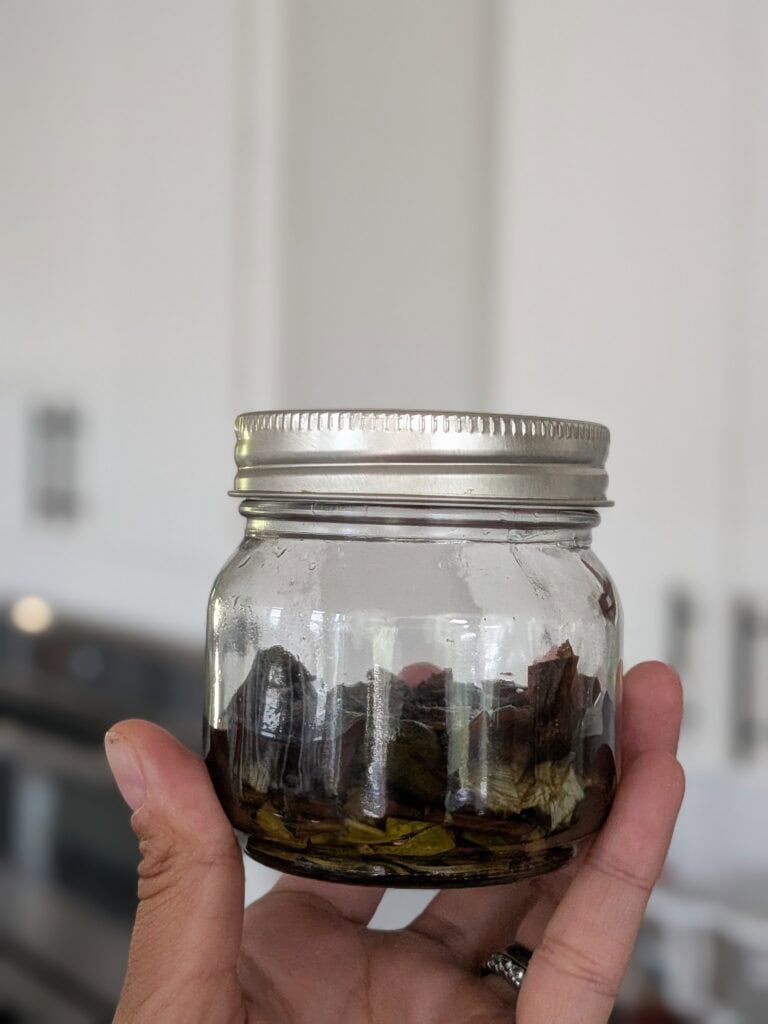
Echinacea can be used externally in salves, washes, or compresses. To make an infused oil, place dried echinacea root or aerial parts in a jar and cover them with a carrier oil such as olive oil. Let the mixture infuse for several weeks, then strain and use the oil as a base for a soothing salve. This can be applied to minor skin irritations as part of a gentle herbal routine.
Echinacea Tea:
A tea can be made from the dried aerial parts or root, though the root is often stronger and more bitter. To prepare a simple tea, steep 1–2 teaspoons of dried herb in a cup of hot water for 10–15 minutes. The flavor is earthy, slightly bitter, and somewhat tingling. Many people drink echinacea tea during the early stages of seasonal discomfort as part of their wellness routine.
Tincture Preparation:
A tincture is one of the most common ways to work with echinacea. To make one, fill a jar with fresh echinacea root or aerial parts and cover them with high-proof alcohol such as vodka. Seal the jar and store it in a cool, dark place for 4–6 weeks, shaking it occasionally. After straining, the liquid can be stored in a dropper bottle and used in small amounts as needed. Fresh plant tinctures are especially valued by many herbalists for echinacea.
Harvesting the Plant:
If you are growing echinacea yourself, the flowers and leaves are usually harvested when the plant is in bloom, while the roots are typically dug in the fall after the plant has matured for several years. This allows the plant to store energy in the root and ensures a more sustainable harvest. Always leave enough of the plant behind if you are harvesting from a garden or wild patch.
Each preparation offers a different way to connect with echinacea’s supportive qualities, whether you prefer a warm tea, a concentrated tincture, or a topical remedy.
Final Thoughts on Echinacea
Echinacea is a bright and dependable herb that has earned its place in the world of herbal medicine. With its striking flowers, rich history, and long-standing reputation for immune support, it is both beautiful and useful.
By learning how to identify it carefully, understanding its traditional uses, and respecting its cautions, you can work with echinacea in a safe and thoughtful way. Whether it finds its way into a tea, tincture, or salve, echinacea remains a trusted ally for those who appreciate the healing gifts of the plant world.