Red Clover: The Gentle Cleanser of Field and Body
Red clover is a gentle, healing herb that also tastes great on salads! Discover it's practical uses, benefits, and how to identify this common herb.
When I started my journey from pharmacy to herbalism, I was shocked to learn that the purplish-clovers that most people battle out of their yards was actually a gentle healing herb.
For herbalists, red clover is a reminder that healing doesn’t always have to be dramatic. Sometimes, it’s about gentle, steady support—nourishing the body, encouraging balance, and working in harmony with natural rhythms. Whether you’re foraging in a sunny field or building your herbal toolkit at home, learning about red clover opens the door to a plant that is both approachable and profoundly supportive.
Identifying Red Clover in the Wild
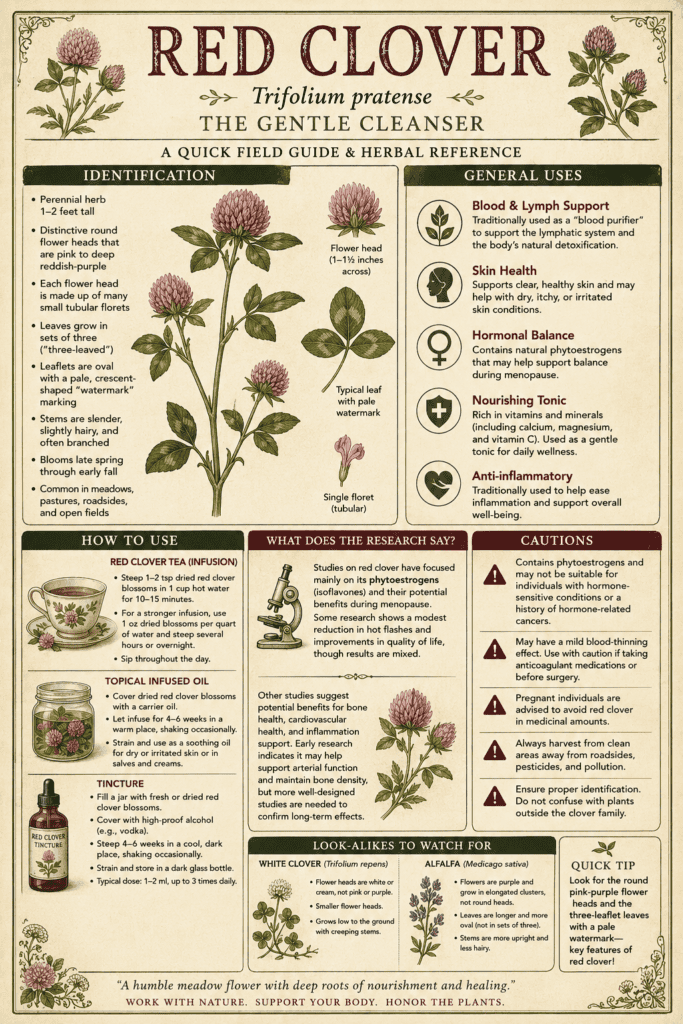
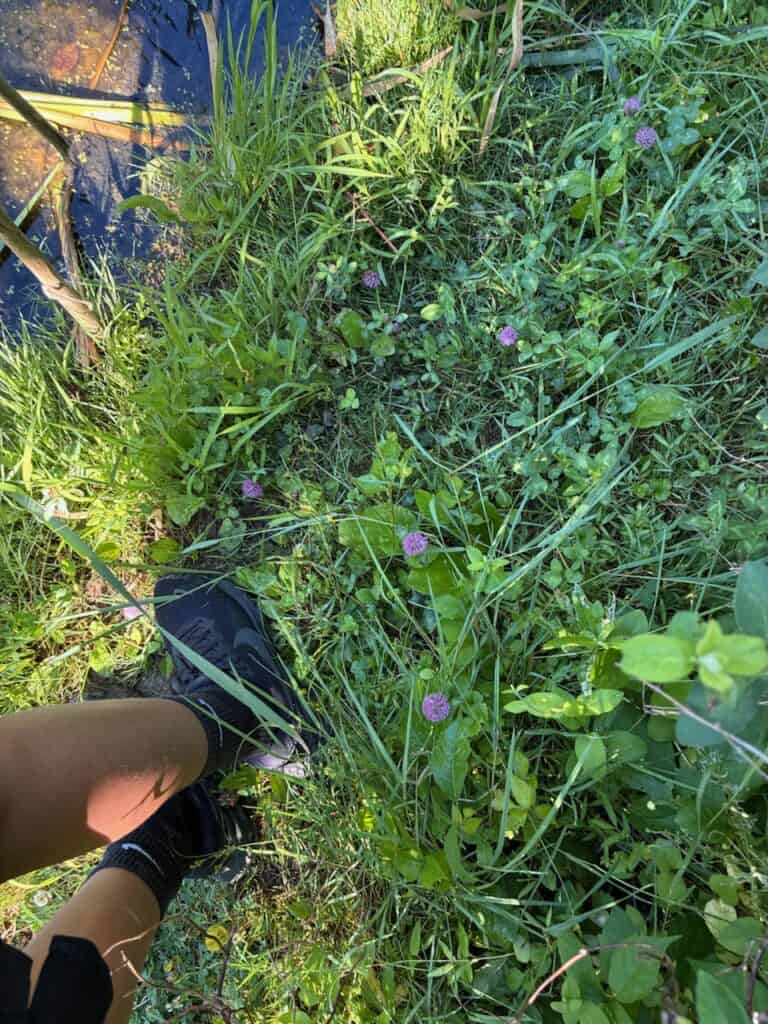
Red clover (Trifolium pratense) is a common perennial plant (meaning it returns each year) found in meadows, pastures, roadsides, and open fields. It thrives in sunny areas and is often used in agriculture as a cover crop, making it widely accessible for foragers. Once you know what to look for, you will start to see it everywhere.
The most recognizable features of red clover include:
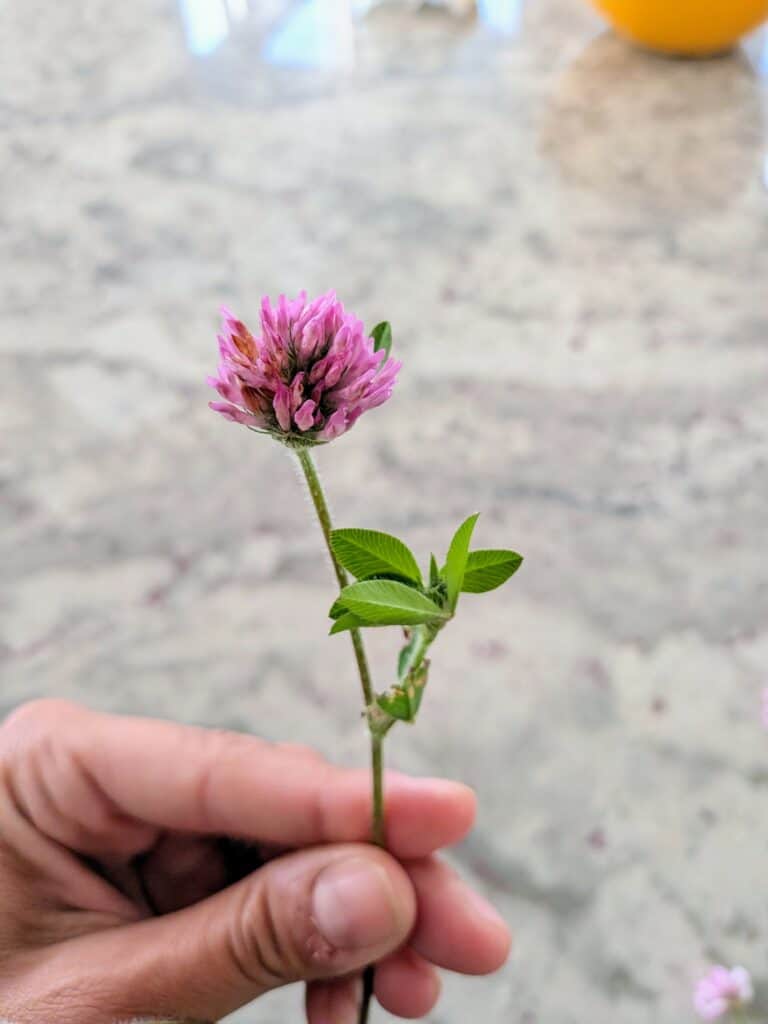
- A round, globe-like flower heads, which range in color from soft pink to deep reddish-purple. Each flower head is made up of many small tubular florets, giving it a fuzzy, textured appearance.
- Typically grows about 1 to 2 feet tall, with slender, slightly hairy stems.
- Leaves grow in groups of three - each leaflet is oval-shaped and often marked with a pale, V-shaped “watermark” near the center
While red clover is generally easy to identify, it’s still important to be mindful of look-alikes. White clover (Trifolium repens) is a close relative and not harmful, but it has smaller white flowers and a creeping growth habit.
Always confirm identification with multiple characteristics before harvesting.
Traditional and Modern Uses of Red Clover
Red clover has long been valued as a nourishing and cleansing herb. Traditionally, it has been used as a “blood purifier”—a term herbalists use to describe herbs that support the body’s natural detoxification processes. While modern language may differ, red clover is still appreciated for its ability to gently support the lymphatic system and overall wellness.
One of its most well-known uses is in skin health. Red clover has been used to support conditions such as dry or irritated skin, often working from the inside out. Its gentle action makes it a popular choice for long-term use in teas and herbal blends.
Red clover is also rich in vitamins and minerals, including calcium, magnesium, and vitamin C, making it a nourishing addition to daily herbal routines. It is often used as a tonic herb—something taken regularly to support general health rather than to address a specific acute issue.
Additionally, red clover contains natural plant compounds known as phytoestrogens. Because of this, it has been traditionally used to support hormonal balance, particularly during menopause. However, this also means it should be used with awareness and care (more on that below).
Cautions and Who Should Avoid Red Clover
Although red clover is generally considered a gentle and safe herb, there are important considerations to keep in mind. Its phytoestrogen content means that it may influence hormone-sensitive conditions. Individuals with a history of hormone-related cancers or conditions should consult a qualified healthcare professional before using red clover.
Because red clover may have a mild blood-thinning effect, it should be used cautiously by those taking anticoagulant medications or preparing for surgery. It’s always wise to check with a healthcare provider if you are unsure.
As with any wild plant, proper identification is essential. While red clover does not have highly toxic look-alikes like some other herbs, misidentification is always a risk when foraging. Harvest only from clean areas away from roadsides or places that may have been treated with pesticides.
Pregnant individuals are often advised to avoid red clover in medicinal amounts due to its hormonal activity. When in doubt, err on the side of caution and seek guidance.
Ways to Work with Red Clover
Red clover is a wonderfully versatile herb (sometimes even added fresh to salads) that lends itself to simple, nourishing preparations. Its mild, slightly sweet flavor makes it especially enjoyable in teas and infusions.
Red Clover Tea (Infusion):
To make a tea, steep 1–2 teaspoons of dried red clover or 1-2 tablespoons of fresh blossoms in a cup of hot water for 10–15 minutes. For a more nourishing infusion, you can use a larger amount (about 1 ounce of dried blossoms per quart of water) and let it steep for several hours or overnight. This creates a mineral-rich drink that can be sipped throughout the day.
Topical Use:
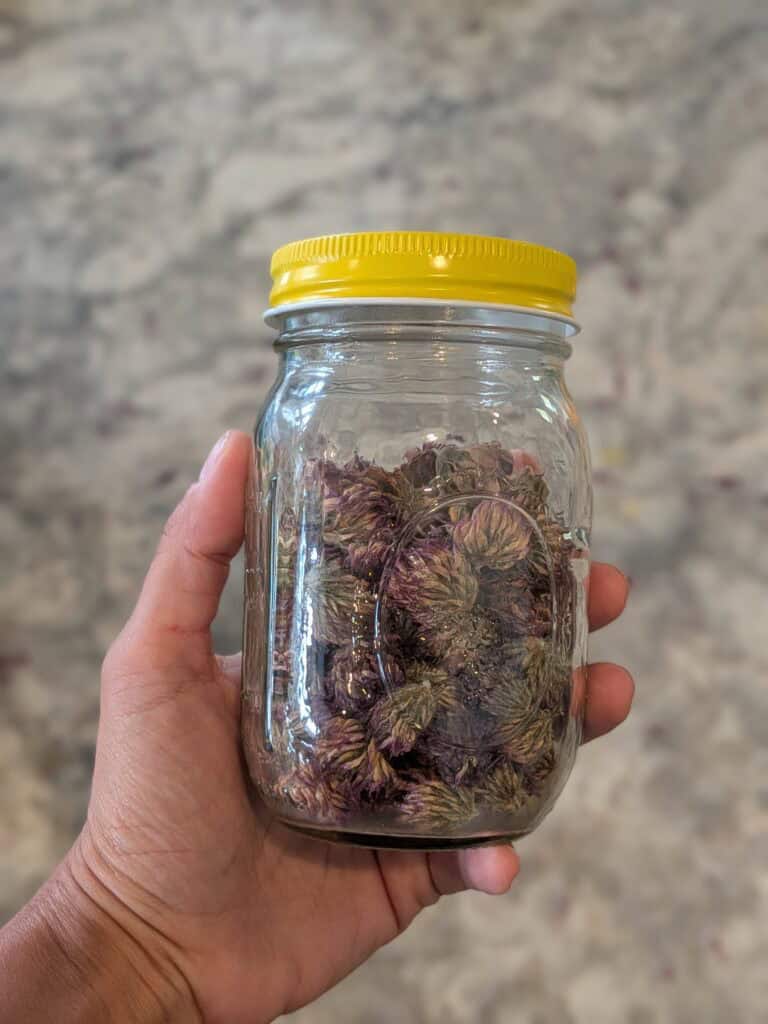
Red clover can be infused into oil and used as part of a soothing skin preparation. Simply cover dried blossoms with a carrier oil and let them infuse for several weeks before straining. The oil can be used on its own or incorporated into salves for dry or irritated skin.
Tincture Preparation:
To make a tincture, fill a jar with fresh or dried red clover blossoms and cover with alcohol (such as vodka). Let it sit in a cool, dark place for 4–6 weeks, shaking occasionally. After straining, the tincture can be used in small amounts as a convenient way to incorporate red clover into your routine.
Each of these methods allows you to experience red clover’s gentle, nourishing qualities in a way that fits seamlessly into daily life.
The Science to Back up Red Clover
Modern research on red clover has largely focused on its role in supporting menopausal health, thanks to its natural phytoestrogens (plant compounds that can mimic estrogen in the body). Some studies suggest that red clover may help reduce the frequency of hot flashes and other menopausal symptoms, though results are mixed. For example, a meta-analysis found a modest reduction in daily hot flashes among women taking red clover isoflavones, while other clinical trials have shown improvements in quality of life—but sometimes no significant difference compared to placebo.
Beyond menopause, early research hints at additional benefits. Red clover’s isoflavones have been studied for their potential effects on bone health, cardiovascular function, and inflammation. Some findings suggest it may help support arterial health or reduce vascular inflammation, while other studies explore its possible role in maintaining bone density during menopause. However, the overall scientific picture is still evolving, and many experts agree that more consistent, well-designed studies are needed to fully understand its long-term effects.
Final Thoughts on Red Clover
Red clover is a beautiful example of how nature offers support in subtle, steady ways. With its vibrant blossoms, nourishing properties, and long history of traditional use, it’s a plant that invites patience and consistency.
By learning to identify it with confidence, understanding its benefits and cautions, and preparing it with care, you can welcome red clover into your herbal practice as a trusted ally. Sometimes, the most powerful remedies are the ones that work quietly—and red clover does just that.