Yarrow: A Wildflower with a Long History of Healing
Yarrow is a fantastically versatile herb - often found right in your own backyard! Consider this a beginner's guide to Yarrow as you discover the history, practical uses, and plant care tips.
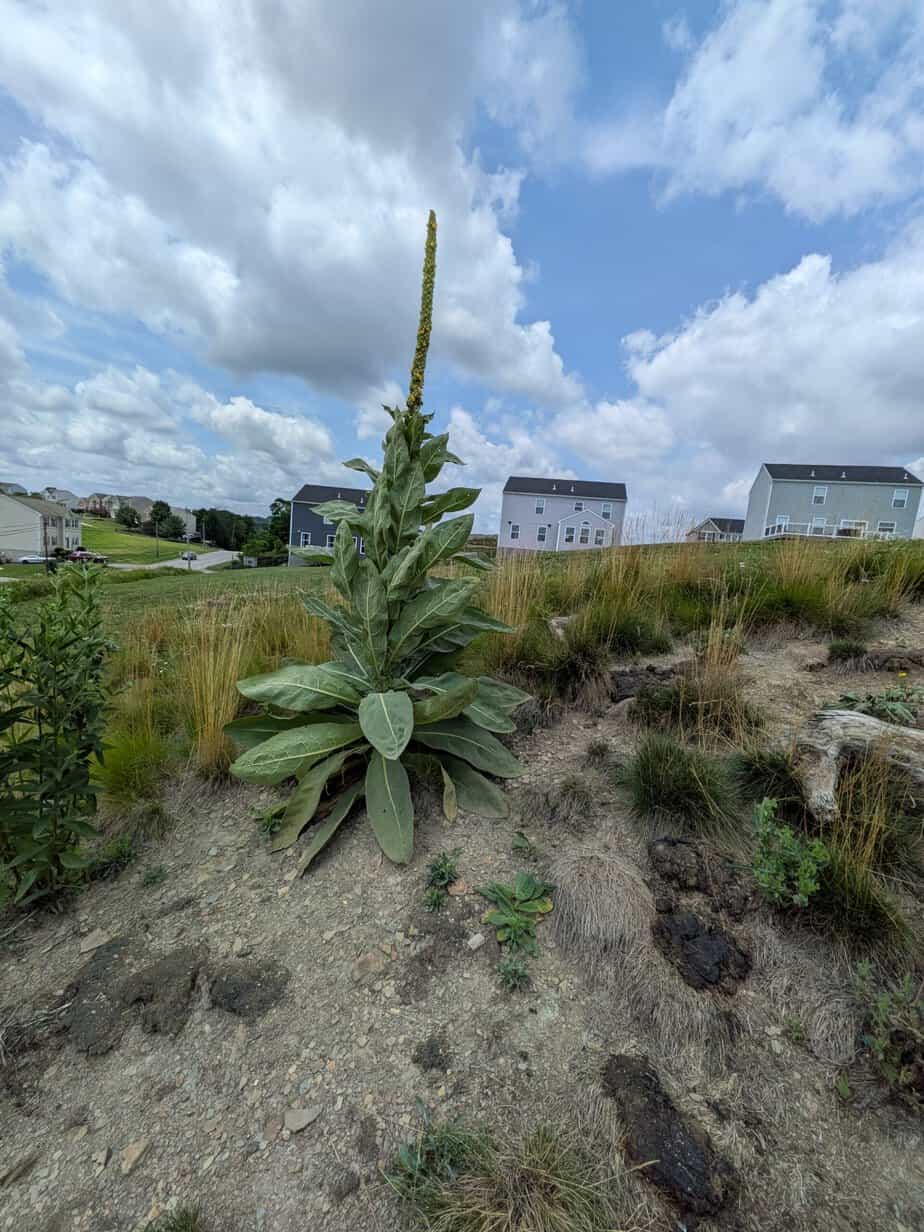
Yarrow has a special place in my heart as the herb that woke up my love for herbalism. After learning about yarrow and buying my first yarrow plant, I took a walk in my backyard and instantly realized I had wasted my money. Yarrow was literally covering my entire back hillside.
If you’ve ever wandered through a sunny field or along a quiet roadside and noticed clusters of delicate white flowers hovering above feathery green leaves, you may have already met one of herbalism’s oldest allies: yarrow. Often overlooked as a common weed, this resilient plant has a long and storied history as a healer, protector, and everyday remedy. For centuries, herbalists have turned to yarrow for its ability to support the body in both subtle and powerful ways.
Yarrow invites us into a deeper relationship with the land—one where medicine grows freely and generously. Whether you’re a seasoned herbalist or just beginning your journey, learning to identify and work with yarrow is a rewarding step toward building your home apothecary. In this guide, we’ll explore how to confidently identify yarrow, understand its traditional uses, recognize important safety considerations, and transform it into simple, effective remedies.
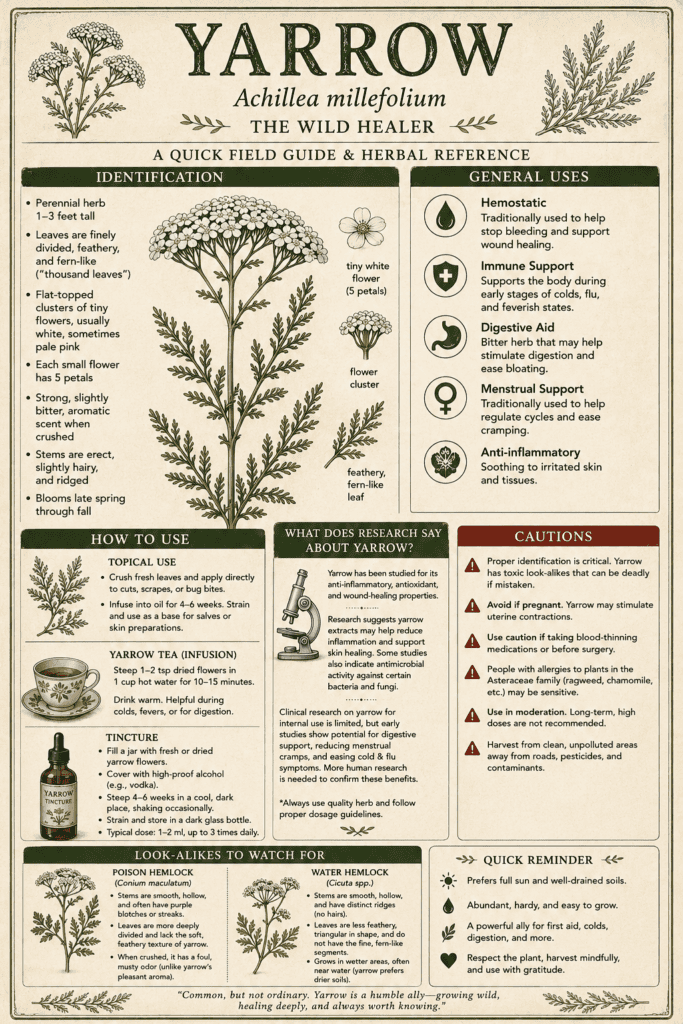
Identifying Yarrow in the Wild
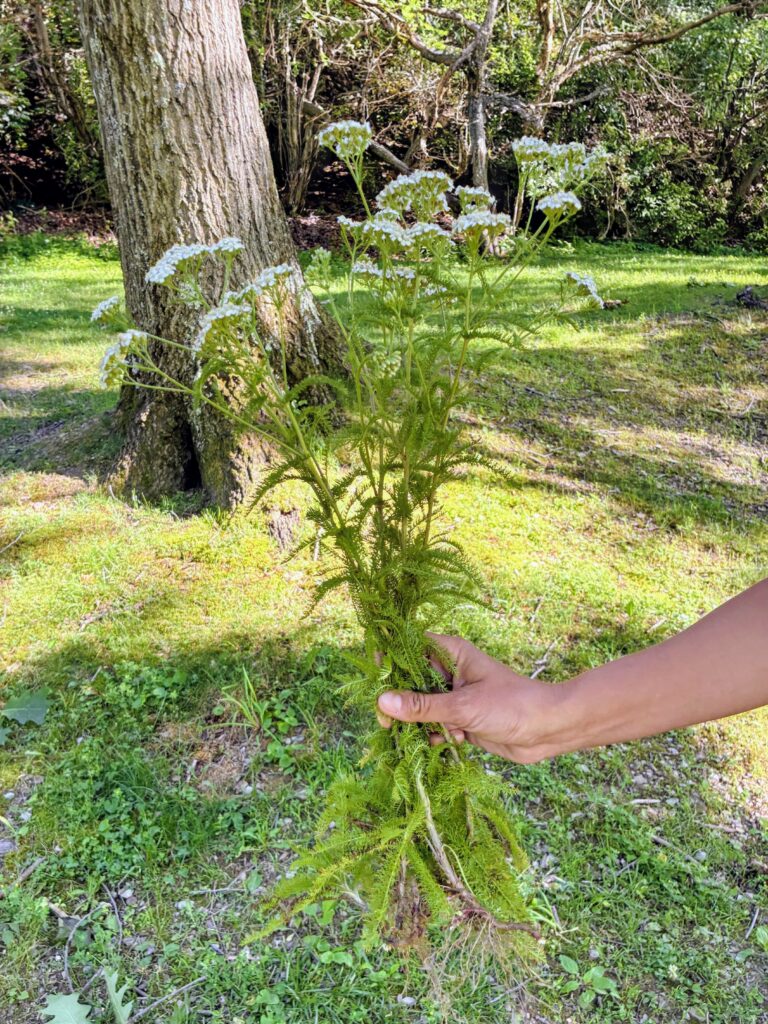
Yarrow (Achillea millefolium) is a perennial plant (meaning it returns each year) that thrives in a wide range of environments, from open meadows to roadsides and even disturbed soils.
Its most distinctive features include:
- Finely divided, fern-like leaves, which give it a soft, feathery appearance.
- Soft cluster of flowers with lace-like appearance- typically white, but can be pale pink
- Typically grows between one and three feet tall, with a sturdy, slightly hairy stem.
- When crushed, the leaves and flowers release a strong, somewhat bitter, and slightly sweet aroma
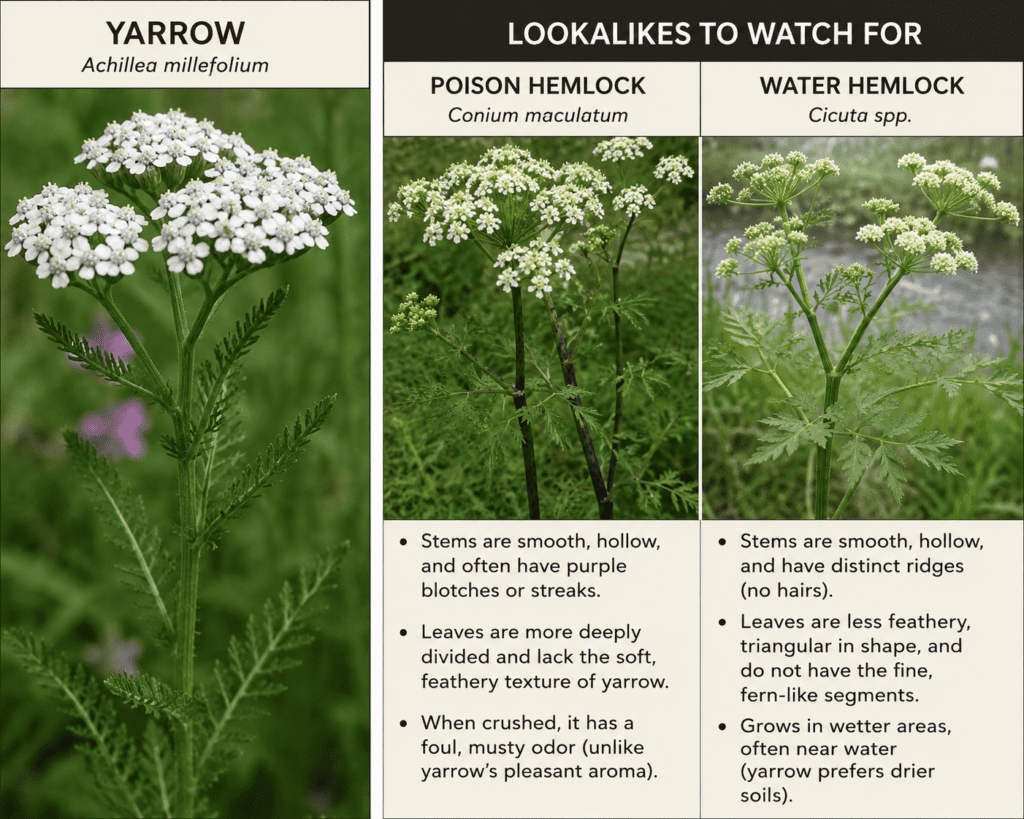
Yarrow has a few look-alikes, some of which can be harmful. Most notably, poison hemlock (Conium maculatum) and water hemlock (Cicuta spp.) can grow in similar habitats. These plants are highly toxic and should never be consumed. Unlike yarrow, poison hemlock has smooth, hollow stems often marked with purple blotches and lacks the characteristic feathery leaves of yarrow. When in doubt, always consult a reliable field guide or experienced forager before harvesting.
Never consume a plant unless you are completely confident in its identity.
Traditional and Modern Uses of Yarrow
Yarrow has earned a reputation as a versatile “first aid” herb. Historically, it was used on battlefields to help stop bleeding—earning it the nickname “soldier’s woundwort.” Its ability to support the body’s natural clotting process makes it especially useful for minor cuts, scrapes, and nosebleeds.
Internally, yarrow is often used to support the immune system, particularly during the early stages of a cold or flu. It is considered a diaphoretic herb, meaning it helps promote gentle sweating. This can assist the body in regulating temperature and moving through feverish states more comfortably.
Yarrow also has a long tradition of use in digestive support. Its bitter properties can help stimulate digestion and ease mild discomfort such as bloating. Additionally, it has been used support menstrual health, helping to regulate cycles and ease cramping for some individuals. Lastly, it may have antioxidant and anti-inflammatory properties as well as help aid digestion.
Cautions and Who Should Avoid Yarrow
Yarrow belongs to the Asteraceae family, which includes plants like ragweed and chamomile. Individuals with allergies to this plant family may experience allergic reactions when using yarrow, especially topically.
It is also typically advised that pregnant individuals avoid using yarrow internally, as it has traditionally been associated with stimulating uterine activity. Additionally, those taking blood-thinning medications or preparing for surgery should consult a healthcare professional before using yarrow, as it may influence blood clotting.
As with any herbal remedy, moderation and mindfulness are key. Start with small amounts and observe how your body responds.
Ways to Work with Yarrow
One of the joys of yarrow is its versatility. It can be prepared in several simple ways, making it an excellent herb for beginners and experienced herbalists alike.
Topical Use:
Fresh yarrow leaves can be gently crushed and applied directly to minor cuts or scrapes as a quick field remedy. This traditional use takes advantage of its ability to help slow bleeding and support the skin’s natural healing process.
You can also infuse yarrow into oil by placing dried flowers in a jar, covering them with a carrier oil (like olive oil), and letting the mixture sit for several weeks. Strain and use the oil as a base for salves.
Yarrow Tea:
To make a simple yarrow tea, steep 1–2 teaspoons of dried or 1-2 tablespoons of fresh yarrow flowers and leaves in a cup of hot water for about 10–15 minutes. The resulting tea is slightly bitter and aromatic.
It is often used during the early stages of illness to encourage gentle sweating or to support digestion. Drinking it warm can be especially comforting when you’re feeling under the weather.
Tincture Preparation:
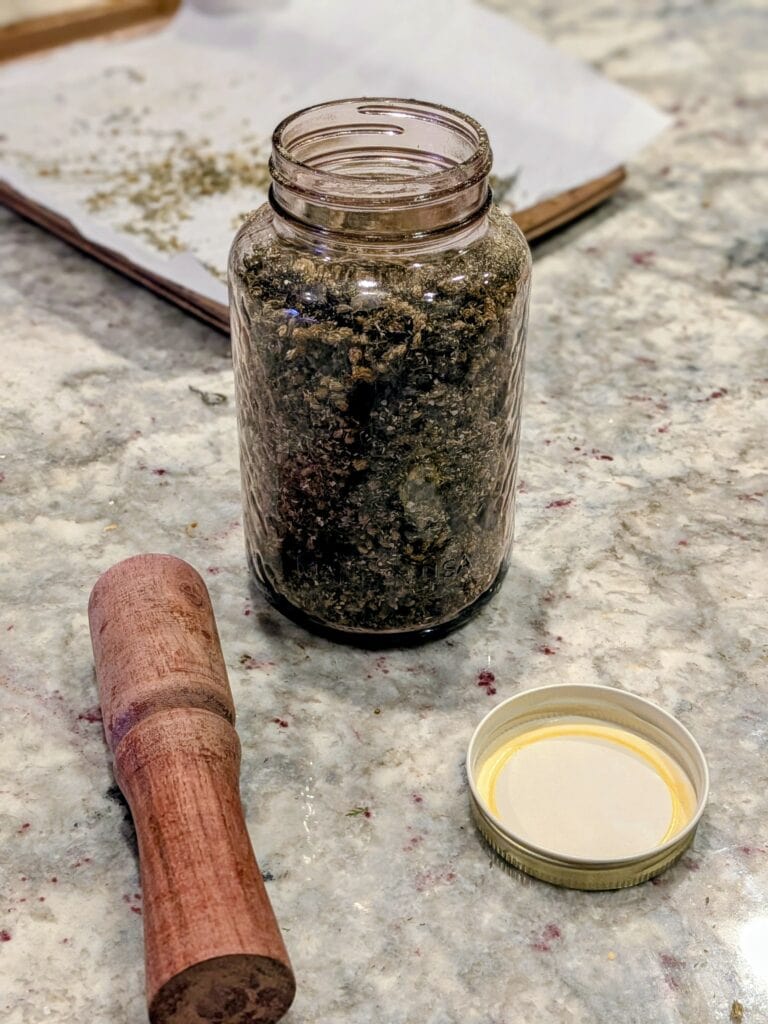
A yarrow tincture is a concentrated liquid extract that preserves the plant’s properties for long-term use. To make one, fill a jar with fresh or dried yarrow flowers and cover them with high-proof alcohol (such as vodka). Seal the jar and let it sit in a cool, dark place for 4–6 weeks, shaking occasionally. Afterward, strain the liquid into a clean bottle. Tinctures are typically taken in small amounts, diluted in water. (There are several different tincture methods - I suggest researching what works best for you).
Each of these preparations offers a different way to connect with yarrow’s supportive qualities, allowing you to choose what best fits your needs and lifestyle.
The Science to Back up Yarrow
Scientific research on yarrow (Achillea millefolium) highlights a range of promising benefits for human health, largely attributed to its rich profile of bioactive compounds such as flavonoids, terpenes, and phenolic acids.
- Studies have consistently demonstrated strong anti-inflammatory and antioxidant effects, with compounds like apigenin helping to inhibit inflammatory pathways in the body. These properties are particularly relevant for conditions involving chronic inflammation, including gastrointestinal disorders and skin irritation.
- Laboratory and preclinical research also suggests that yarrow may support wound healing, as its astringent and antimicrobial qualities can help reduce bleeding and prevent infection while promoting tissue repair. Additionally, its antioxidant activity may play a protective role against cellular damage and oxidative stress, which are linked to aging and various chronic diseases.
- Research indicates potential digestive support, including relief from mild gastrointestinal discomfort, bloating, and spasms, aligning with its traditional use for gut health.
- Some studies and clinical observations also point to benefits for menstrual health, where yarrow may help reduce cramping due to its antispasmodic effects.
- Early findings suggest possible roles in cardiovascular and metabolic health, such as lowering blood pressure or supporting lipid balance, although much of this evidence comes from animal or preliminary studies.
Final Thoughts on Yarrow
Yarrow is a humble yet powerful ally that reminds us how much medicine exists just beyond our doorsteps. With its distinctive appearance, wide range of uses, and deep-rooted history in herbal traditions, it’s a plant well worth getting to know.
By learning to identify it carefully, respecting its cautions, and preparing it thoughtfully, you can welcome yarrow into your herbal practice with confidence. Whether used in a soothing tea, a healing salve, or a simple field remedy, yarrow continues to offer its quiet strength to those who take the time to notice.