
The Dying Art of Letting Kids Simply be Kids
"Your children!" yelled the winded woman at the park with the wild expression who was running my way. "They are attacking each other!"
I slowly leaned back so I could see them in view. My 8 year old son and his 6 year older sister were scrapping on the playground cement. He had her in a solid headlock, and she had a handful of his hair. I did a quick scan for tears or blood, and I saw neither.
"Thanks. They're fine," I told her flatly as she gave me a disgusted look and walked away.
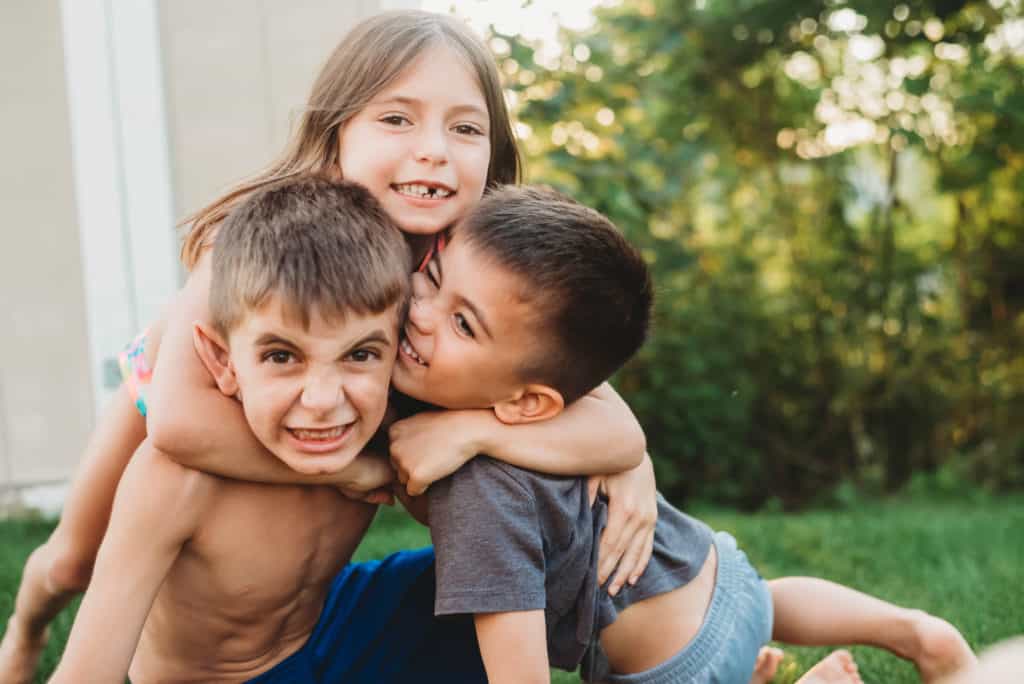
Soon after, my two children released their talons from each other and walked away to play another game together. Unless someone is hurt, I have always felt that their instinctive need to wrestle was not something I should stand in the way of. In fact, they just reminded me of little puppies rolling around and nipping at each other's ears. I always encourage them to climb trees, run around barefoot, and ride their bikes off of jumps.
However, today's society seems to be more concerned with how messy our kids get, how much free time we have as parents, and how other's will perceive the wild behavior.
Deep down, although I feel that children do benefit from some boundaries, I've always had an inherent feeling that rough and risky play was important for the development of children.
Still, the woman's judgmental expression prompted me to do a little research to truly see if letting my children act like caged monkeys who just escaped the zoo was appropriate.
Without hesitation, I went to the one place I trust, The American Academy of Pediatrics (AAP), for answers. It didn't take long before I found what the professionals say about "risky play".
Related: Safety Tips Kids Need Their Parents to Talk Openly About
What is Risky Play?
There are six categories of risky play, according to an article published in Evolutionary Psychology, which include experimenting with:
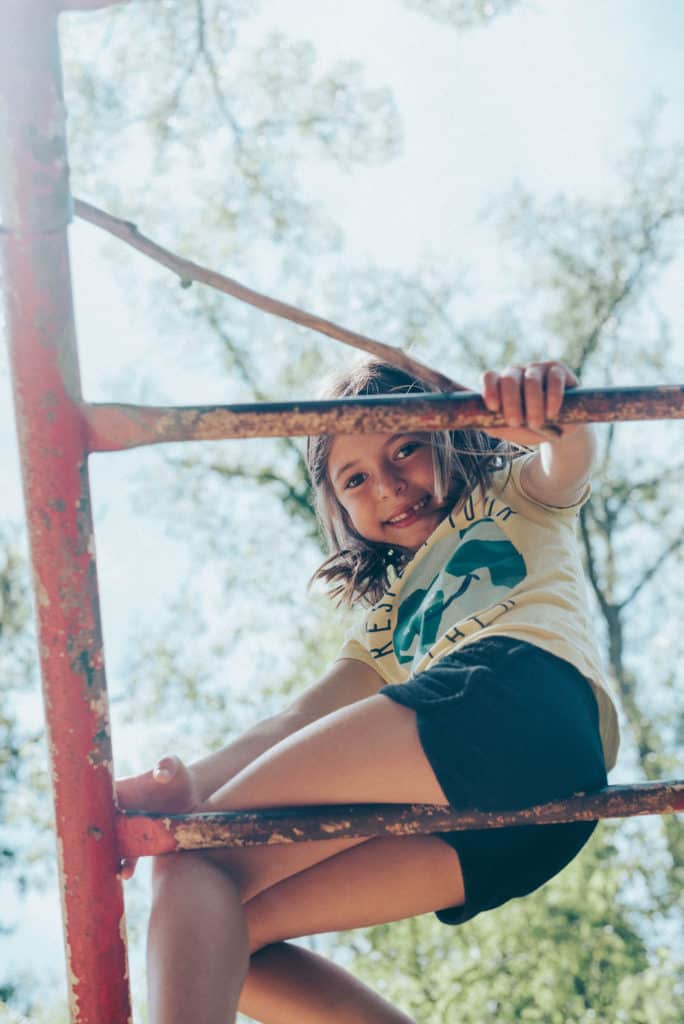
- Heights, such as climbing trees
- Fast Speeds
- Tools
- Dangerous elements, such as fire
- Roughhousing and wrestling
- Separation and exploration
Children are notoriously drawn to risky activities. As parents, it is our job to determine what is appropriate risky behavior (such as climbing a tree) vs. what is harmful (such as playing with knives).
Benefits of Rough and Risky Play
It turns out, the secret to raising happy kids is not so secret. It is to simply let them be kids. It is no secret that kids naturally enjoy rough play. As parents, should we be stepping in to prevent this type of behavior, or should we encourage it?
The Power of Play discusses the many benefits of unstructured play, but I was specifically curious about what is said on rough and risky play.
The experts at the AAP explain, "Play is not just about having fun but about taking risks, experimenting, and testing boundaries." They explain that studies suggest that risky play provides animals and humans with skills that will help them with survival. Of course most of us are not concerned with teaching our children how to escape from predatory lion chasing them down; however, rough and risky play has many other benefits.
1) Rough play builds emotional intelligence
Similar to animals, rough-and-tumble play enables children to take risks in a relatively safe environment. This helps children learn skills needed for communication, cooperation, and it promotes the development of emotional intelligence.
Recently, my 3 year old son decided to climb UP the slide at the park. He was quickly bowled over by another kid who was riding the slide properly. I watched this go down, and I did not intervene. My son got up, shook it off, and started to climb the ladder to do it the right way.
He had learned a simple life lesson that if you don't follow the rules, you might get hurt. He was actually learning important skills while he was getting kicked in the chest.
2) Rough play teaches sportsmanship
According to The Power of Play, guided competition in the form of sports or rough play allows all participants to occasionally win and learn how to lose with grace.
The children in our neighborhood often meet up for a game of tackle football. There is a lot of 'tackle' and not so much 'football'; however, there is a lot of learning taking place.

The kids learn emotional lessons, such as dealing with a loss and interacting with peers. Even though there is an occasional bloody lip, the boys are developing an immense amount of social skills about how to interact with other people when things don't go your way.
3) Rough play teaches empathy
Recently, two of my children were playing something that resembled a dangerous version of "ring around the rosie". They would hold hands and try to swing each other around as fast as they could - until one child let go and flew backwards.
As expected, my daughter let go of my son's hands and he practically did a flying back-flip into our couch. Before I could run over to comfort him, my 6 year old daughter sprinted to his side. She hugged him, helped him up, and they found a new game. It was a very simple act, but she was learning the negative feelings that were associated with inflicting harm on someone else. Through that silly and dangerous game she was practicing empathy.
4) Physical benefits of rough and risky play
Physical play, particularly outdoor play, shows countless benefits. Studies have linked outdoor play with decrease in stress, fatigue, injury, and even depression.
In fact, Britain has even gone as far as modifying its guidelines on play, highlighting that “the goal is not to eliminate risk." The impact of this type of play is clearly noticed and backed up.

Tips for Parents
As parents, it can sometimes seem like a challenge to provide our children with a balance between risky play while still ensuring their safety. Tap into your intuition in all situations. Remind yourself of the benefits of rough play. Kids are resilient little creatures. If you are unsure, ask yourself:
- Is my child doing something that could cause serious harm to themselves or another child?
- What are realistic, negative outcomes?
- What is the risk level?
For example, if my child wants to run around at the park with no shoes on, the worst (realistic) thing that could happen is they get a splinter. If they want to play with knives, that is a different story, of course! (high danger, high risk).
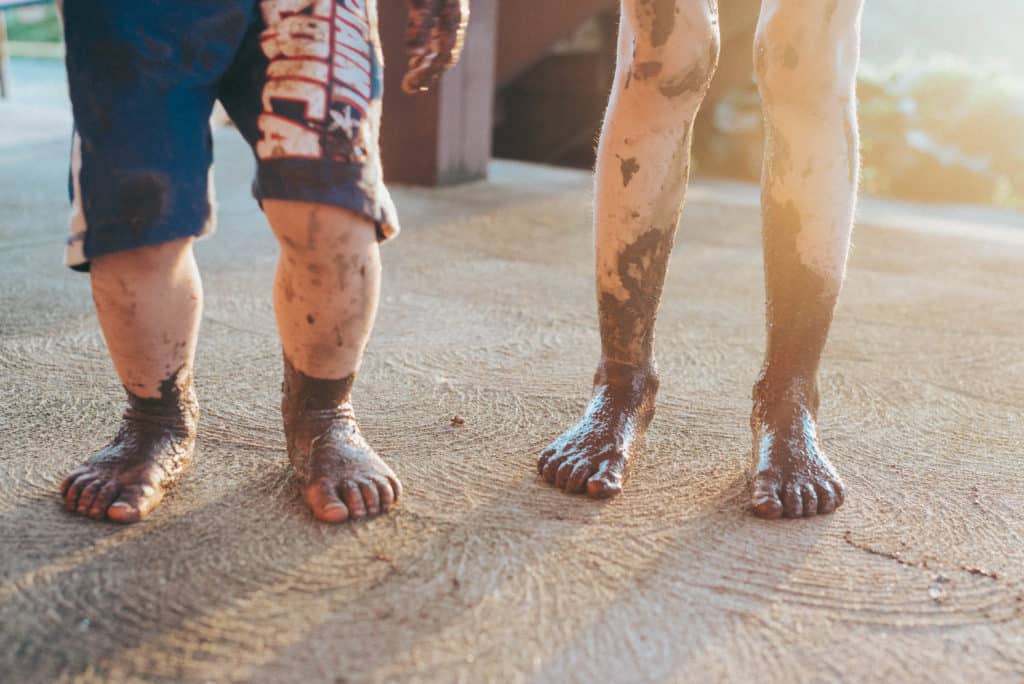
If you don't feel comfortable, start slow. Let them ride their bike down a hill with your supervision. Allow them to roll around in mud or climb a tree. Or simply stop yourself from immediately running to their rescue when they are trying to perform a slightly risky activity or struggling to complete a task on their own.
Give them some space to simply be a kid.
You can still supervise them from a distance, and let them explore the world. Often my kids don't even realize that I am watching them like a hawk from our porch.
Final Thoughts
While your children are learning these important lessons, they are building priceless memories of childhood that they will not soon forget.
Next time someone judges you for having wild children, just inform them that your kids are only building emotional intelligence, practicing empathy, learning interaction skills, and building confidence.
If you found this helpful share it, and subscribe for more updates!
Resources:
https://www.nytimes.com/2018/03/10/world/europe/britain-playgrounds-risk.html , Assessed 9/30/2019.





Very well done!! Love the way you include research from American Academy of Pediatrics. Maybe we can all relax a little when our children are really doing exactly what they are supposed to be doing!!
when i was little me and my brothers would Sit on the ledge of a our playset .one me or one of my brothers would be swinging and yank your legs to try to get one us to fall. You have to try to hold on to the swing set
This post is absolutely awesome. I love your research and points for parents. Thank you for this, I will be back to your blog!
Good piece of writing. This is so true and definitely good reminder. Especially for me who has two never-run-out-of-energy boys who at times drive me crazy. Thank you for sharing.
I love the six categories of Ricky play shared here. Thanks
My siblings and I were raised the same way. We may seem like we play rough, but we are tough because of it. We are also really close even as adults. Keep those kids tough! It seems like it’s the right thing to do!
Absolutely love this! What an awesome parenting “bible” you’re creating. I’ll definitely refer back to your posts whenever I have my own!
Just like adults need to let their wild out through play/ dance/ art/ sports etc. kiddos need to too!
Loved this! I do believe there are a hundred views for 1 thing, but you shouldn't have questioned yourself. Her view of things on your life shouldn't matter. You're doing great raising your kids the way you want to.
I love love love this! And thanks for explaining what risky play is and the benefits. I get crazy looks from people too. 95% of the time it's just rough play. For the 5% of the time when my boys are actually trying to hurt, then yes, I intervene. I was verbally attacked at a park for my kids and a bunch of their friends (whose moms were across the park and out of ear shot) for playing rough and with toy guns that only made noise. It was quite the scene but thankfully I was able to remain calm. It ended with them calling the cops and the cops never coming. I think people need to realize how important play is and you nailed it - it truly teaches empathy and helps them understand their world. Thanks for sharing!
It is so refreshing to hear other moms who feel the same! I very much appreciate your comment- sounds like we would be good friends! 🙂
Very informative!
I used to climb trees all the time as a kid! haha I had a favorite tree to climb too! Great article!
I agree that kids have to learn their own limits to a certain point. Although I still feel myself getting nervous when they are doing this like climbing trees.
I want my son to have experiences. I am not a worrying mother type. Of course, I care if my son wants to jump off the roof of the house, but if he wants to climb a tree, I am okay with it - of course, under my supervision. I always feel that people need to LEARN from experiences!
This is a great topic! Such a great way to reflect as parents. I try to be hands off in some ways but I have to admit I have a hard time letting them be risky.
very interesting topic. I agree that kids learn by going wild and carefree. Some of the parents I know are being way too protective and as a result, the kids are not willing to try new things that are out of their comfort zones.
Its really important information.Every parent should keep these tips in his mind..Thanks for sharing this
great points I'll definitely bookmark this for future reference
Yes, I love this. I think the tendency these days is to watch our children like hawks. But it’s so important that they are able have those risky experiences (as long as they’re not too risky of course).
Great approach I do this with my.boys. they play rough but I left them handle it as long as they are not hurting each other
I don't have children but when I think about my childhood I remember a lot of playing outside, climbing trees or using tools to build wooden football pitches for my toys. These days children are pinned in front of their computers because parents think outside play is dangerous. It is not, as you have underlined in this article.
I agree with all of these! I remember when I was a kid, I was "one of the boys" and I used to wrestle with my cousins, play nerf guns, climb trees, and we'd have backyard camping every month. It was so much fun! I think that's how I developed my love for the outdoors and sports. I've become more open do things that others are afraid to do. I think it's fine to allow these activities provided they're being supervised by their parents. Thank you for this post! This brings so much memories! <3
Absolutely true points you mentioned here. Kids starts to learn as soon as we help them to learn. Knowingly we can definitely let them do those things under adult supervision and help them grow and let them learn to follow the rules. Thanks for the post.
This decade's parents are super sensitive and so are the rules that govern child safety. Kids cannot go to the park by themselves anymore. Or, they are caught accidentally scratching a person, that child's parents is blamed for bad parenting. I am a preschool teacher and see this situations a lot.
Hey,
Sounds Good. The article is really awesome and it really well contents.
Thanks For Sharing.
Aashirvad Kumar
Youtube Name Generator Online