
How to Adjust Your Body Language When Talking to Your Kids to Speak Love
You arrive at a party with people that you haven't met before. You approach a group and introduce yourself.
Imagine that none of the people in the crowd turn to face you. They don't make eye contact, and they talk over you. Do you feel welcome or do you feel that you need to head straight to the bar or dart for the exit?

Continual research shows that body language counts for a whopping 55 percent of what is absorbed while 38 percent is tone of voice. Only 7 percent is the actual words that are spoken.
It is clear that body language, or non verbal communication, plays an enormous role in our day-to-day social interaction.
As a parent, are you paying attention to the body language you exhibit while interacting with your children?
Because your children are absolutely and undoubtedly paying attention to your body language.
The Language of the Body
As humans, it is incredible that our brain requires us to act physically to express sentiments. These emotions, like happiness, anger, fear, and disgust are universally recognized even when verbal communication is absent (Ekman 2003).
Children of all ages pick up on non-verbal cues in powerful ways. Interestingly, children who are born deaf and grow up together in the absence of adults guidance, will develop their own form of sign language in order to communicate thoughts and feelings with each other (Ratey 2001).
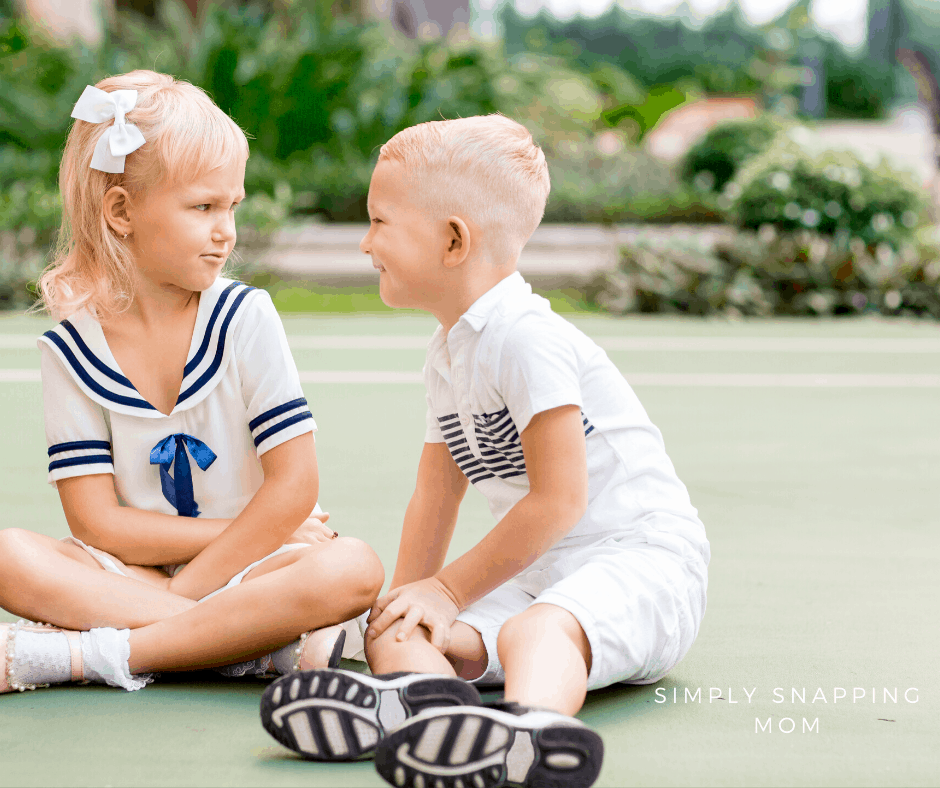
When you are busy, which is the majority of the time for many of us, chances are you are not paying attention to the non-verbal ways you are communicating with your children.
3 Ways to Adjust Your Body Language
Luckily, you can quickly adjust your body language in ways that speak love to your children, no matter what age they are.
When you practice these methods, you will find that they become as natural as smiling when you are happy.
Related: Hard-wire your kid's brain for happiness
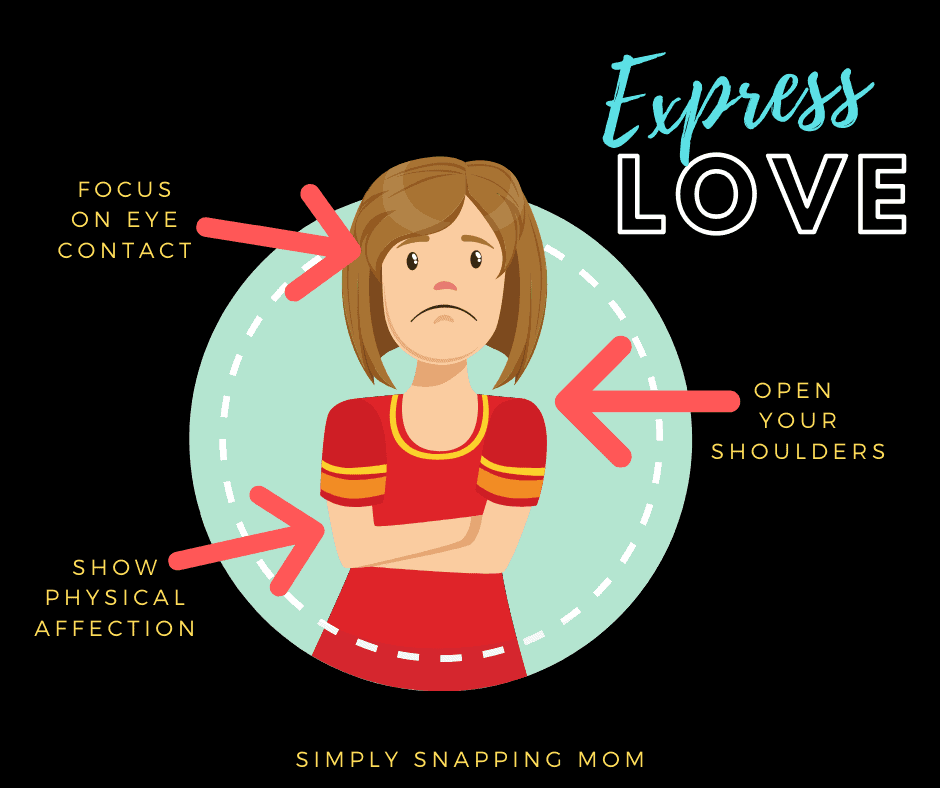
1) Open Your Shoulders to Your Children
You've no doubt heard the phrase "giving a cold shoulder".
When someone is addressing you with their shoulders turned away from you, it gives the impression that person is disengaged, bored, or detached.
How often do you speak to your children while you are busy doing something else? Although we don't mean to, we often don't face our children when we are talking to them.
I realized that I frequently talk to my kids while I am doing the dishes, or walking into the other room to grab something. When this happens, it is clear that they feel the detachment.
They speak louder, repeat what they are saying, or follow me into the room (while speaking to my back). It is clear that children can feel when they are not focused on.
Take the time to stop what you are doing, face your shoulders towards your child, and give them the respect and attention they deserve.
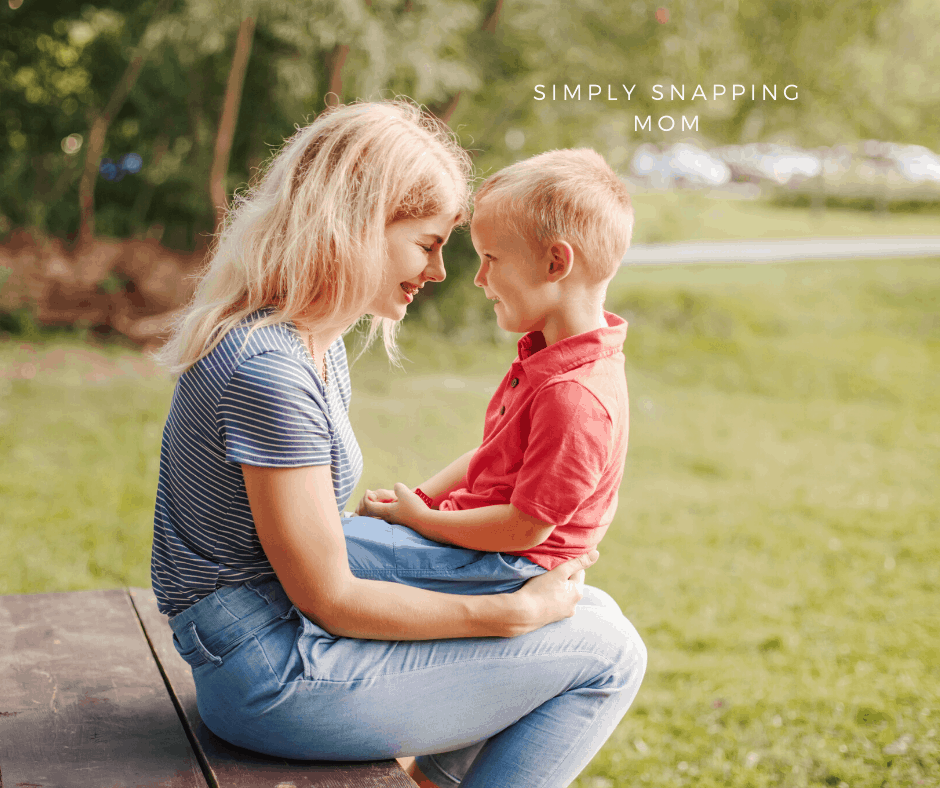
2) Prioritize Direct Physical Contact
Experts stress the importance of skin-on-skin contact between a mother and a newborn; however, did you know that the benefits of physical contact extend beyond infancy?
A recent study out of Harvard has found that people who had warm, affectionate parents in childhood actually live better lives.
Some ways to physically connect with your children include:
- Rubbing their back while you are talking to them
- Hold hands when walking
- Cuddle before bed
- Sit close while reading a book together
- Tickle them
- Make up a handshake
Personally, I made it a habit to simply touch my child's hand or back while we are talking.
Physical touch shows your child that you are in the moment with them, and they have your undivided attentions.

3) Focus on Eye Contact
When you make eye contact with your kids, you are making a deeper connection with them. You are opening the lines of communication.
You are instantly showing them that you value and respect what they are saying.
Also, you are teaching them the importance of making eye contact, which is an important social skill.
Related: Make your kids feel notably special in under 10 minutes a day
Final Thoughts
When you make these quick and simple adjustments to your body language, you are showing your children that you value them. It will improve their confidence, strengthen your relationship, and guarantee that they feel loved.
In summary:
What parent wouldn't want that?
If you found this helpful, share it and follow us on Facebook for up to date discussions on simple parenting.

Resources
1) "Silent Messages" -- A Wealth of Information About Nonverbal Communication (Body Language). Assessed June 22, 2020.
2) Ekman, Paul. 2003. Emotions Revealed: recognizing faces and feelings to improve communication and emotional life. New York: Times Books.
3) Ratey, John J. 2001. A user’s guide to the brain: perception, attention, and the four theaters of the brain. New York: Pantheon Books.
4) Ying Chen, Laura D. Kubzansky, Tyler J. VanderWeele, Parental warmth and flourishing in mid-life, Social Science & Medicine, Volume 220, 2019, Pages 65-72.

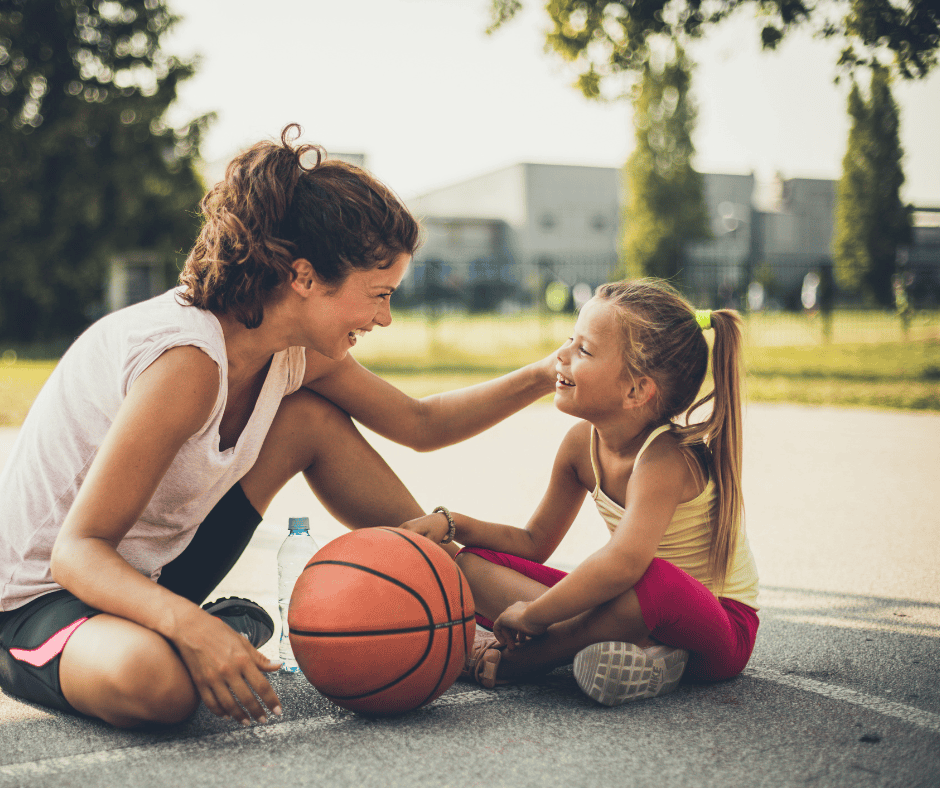


I also hold my son's hand or touch him while talking, I find it relaxes him and pays more attention. It is so important to build a strong relationship now they are kids and offer them the respect they deserve!
What a smart parenting tips we should consider. We need to open our shoulder for kids and talk more about life.
Such great pointers. I had no clue body language could mean so much. Thanks for sharing.