
Teach Your Kids How to Calm Down on Their Own
These simple activities will help you raise kids who can calm down on their own.
If you are a parent, then you already know that can rely on these two truths:
- No kid on earth is calm all of the time
- Telling your kid to "calm down" is as effective as trying to tell a fish to breathe air
The reason we can say this so confidently and free of judgement is because having a hard time with big emotions is an expected phase of development in children.
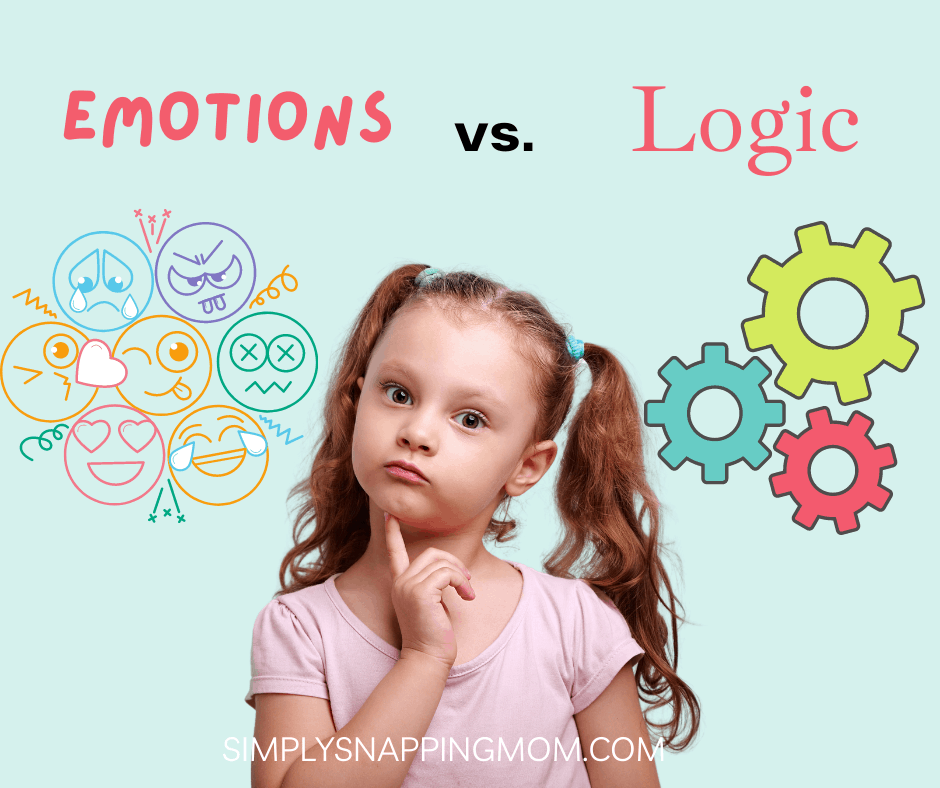
Experts, like Lindsey Giller, PsyD, a clinical psychologist at the Child Mind Institute, explains that emotional side of the brain isn’t communicating with the rational side at a young age. The fancy name for it called "dysregulation".
Your kid strongly desires ice cream before dinner. Before their logical brain can realize it is not acceptable, they are already in full blown meltdown mode.
Luckily, the ability to calm down on your own (or regulate your emotions) is a learnable skill. How cool is that?

These 5 tips will help you teach your kids to slow down and control take control of their feelings.
Regulate Emotions Like a Pro
Let's keep it simple and return to the ice cream example above.
You child knows they can't have an ice cream sundae before dinner. However, they want it so badly that their emotions take over.
Once your child learns these skills, they will be able to moderate these emotions and logic. Teach your kid how to calm down on their own with these 5 tips.
Related: How to Teach Kids to Be your Own Biggest Fan
1. Validate Your Kid's Emotions
Validating emotions is the first step.
It is important for your child to realize that their feelings are not wrong or bad. Of course they want ice cream. Of course they feel sad. That is normal.
Once your child learns how to express their emotions they can start to be mindful of why they feel a certain way, and start to think more logically.
A great way to do this is to encourage your child to speak in "I" Statements.
“I” statements force the speaker to express their own feelings, rather then placing blame on others. For example:
- “You” statement: You never listen to me
- “I” statement: I feel frustrated when I feel like I can’t express myself.

Try these nervous system regulation activities, too!
2. Calm Down Activities
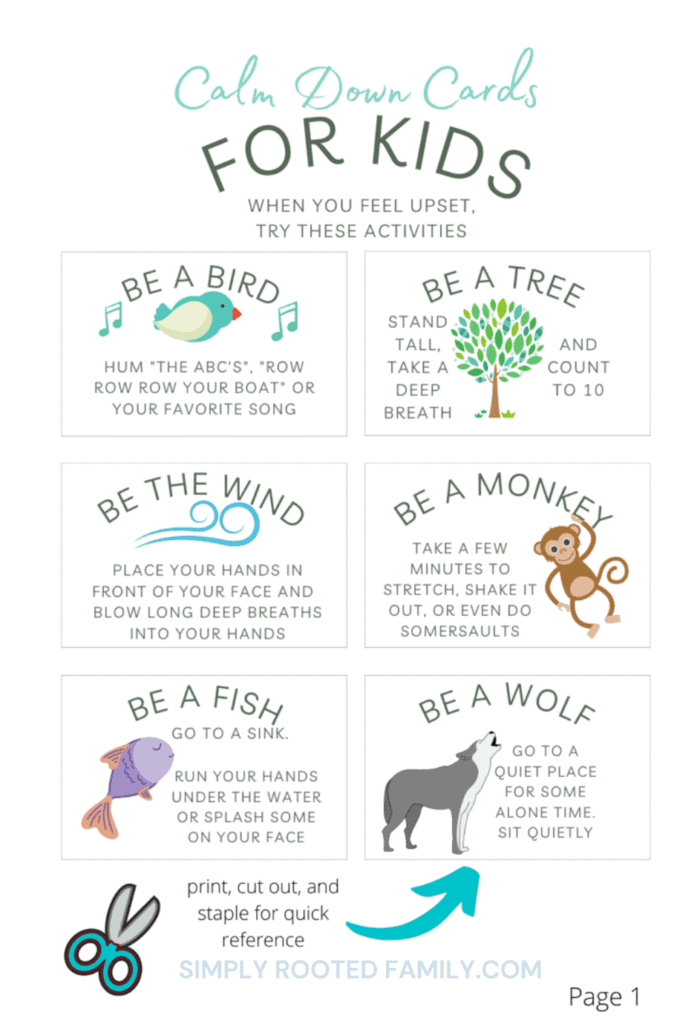
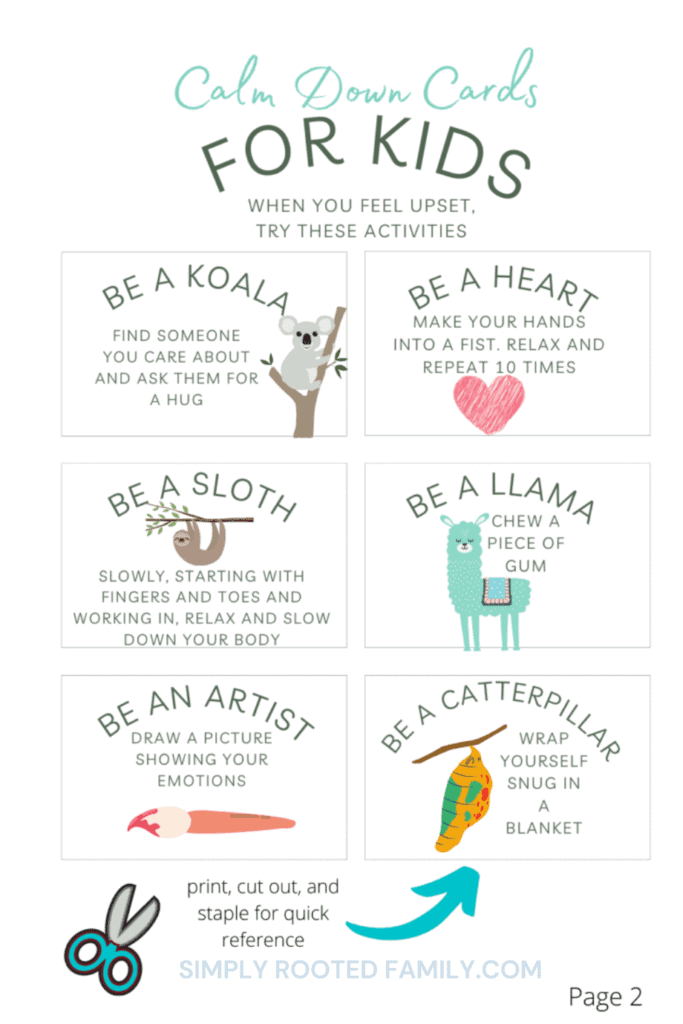
Give your kids the tools to calm down on their own with these simple printable activities.
These 12 activities are based on proven calming strategies, and are designed to distract kids from frustration and anger so they can self regulate. They include:
- Quick breathing exercises
- Easy stretches
- Calming strategies
Print these 12 Calming Card, cut them out, and have them in your kid's back pocket. And Click here to Download Your Free Calm Down Cards now.
Also, consider a calm down corner, such as these simple reading nooks for kids.
3. Learn to Live in the Moment
Learning to be mindful is an important factor in emotional intelligence.
Essentially, mindfulness is the ability to live in the moment, or to 'stop and smell the roses'. This skill will help your child build a mental bridge between the emotions they feel and the logic they understand.
Simple activities can help train your kid's developing brain to block out distractions.
Click here for free animal-themed mindfulness activities for kids.
4. Model Problem Solving
We all feel "big emotions" on a regular basis, and sometimes it can be just as challenging adults to regulate these emotions.
Talk to your child about things that are going on in your own life, such as, "I am frustrated because I thought I bought pasta, but I can't find it. I will have to think of a new dinner."
Even if you do lose your temper, you can make it a good experience for your kid by doing these 5 things.
5. Prioritize Quality Time
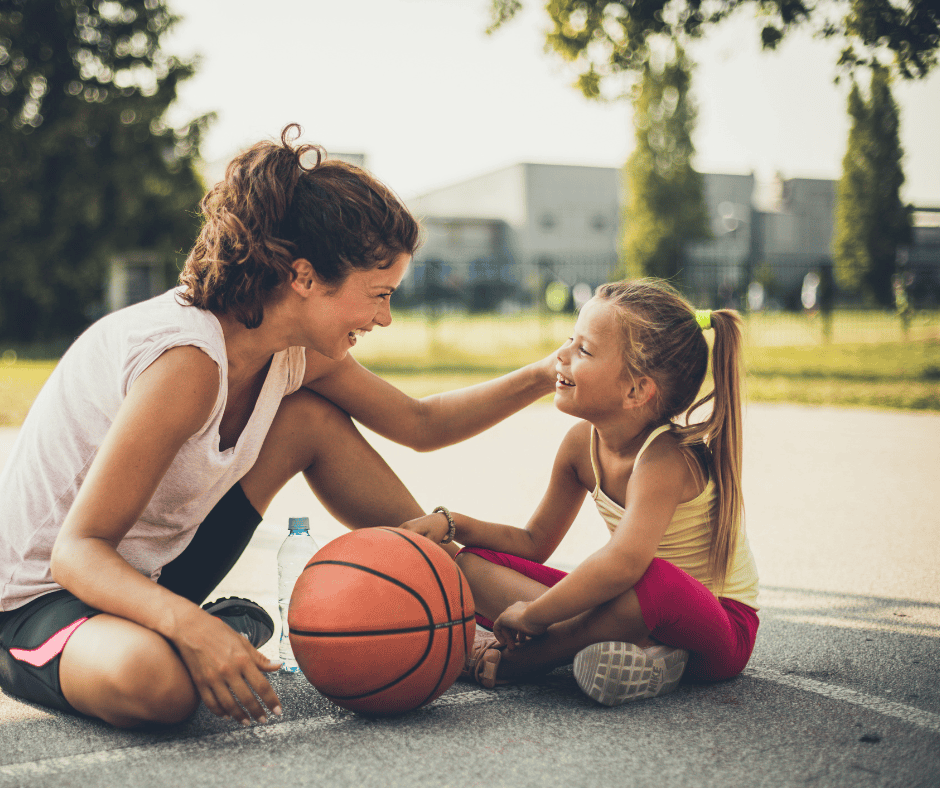
Lastly, having a positive connection with your child will help tie all these lessons together.
Research shows that even short bursts of focused time can help you strengthen relationships, feel more at peace, and bring joy to your family. It has been proven that:
- Snuggling and cuddling can releases “feel good” chemicals that decrease stress hormones in parents and improve cognition and development in children.
- Relaxing, agenda-free, can help prevent burnout.
- Having conversations with your kids, especially at bedtime, gives kids time to process their emotions and deepen your relationship.
Also read: how to connect with your kid, even on your busiest days.

Final Thoughts on Teaching Kids to Calm Down on Their Own
These 5 tips will help your child bridge the gap between their big emotions and their thought process. Kids who have this skill are able to self regulate and calm themselves down.
We may always still want ice cream before dinner, but when you learn to control your emotions you will realize the chocolate sundae will still be waiting for you after you eat your broccoli.
If you found this helpful, follow us on Facebook and share it!



Well said. Children are susceptible to emotions just like everyone. All they need is their parents’ love and support in a good environment. Showing love and support to them by being there for them is enough.
I’m an empty nester and I’m extremely happy about that! If I were still an active mama, I’d be all over these great tips! Hindsight is 20/20! Remember that ladies!!!
Great tips and suggestions. Calming kids with activities are an interesting method.
very useful post. It is indeed very important and mostly builds your child's independence sooner.
Some very nice tips here, especially for new parents. I was always a calm kid so I don't think my parents had any problems in this area. haha
This is a really good and informative post! Calming kids can help through their life because they will remember to do this as adults too
Calm down activities are great but actually modeling how to cope with bad emotions in a healthy way is definitely what will make a change in the long run. Children live what they learn!
I don't yet have kids but think these are great ideas for parents to utilize.